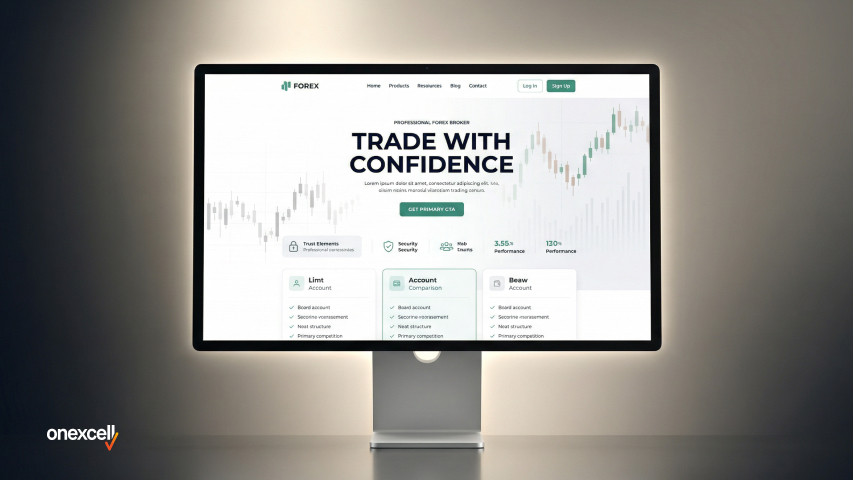
A professional Forex website design builds credibility, improves trader trust, and directly impacts conversions. In a highly competitive forex market, your website is your first impression—and often your only chance to win a client.
What Is a Professional Forex Website Design?
Let’s start simple. A professional Forex website design is more than just a “pretty” website. It’s a strategically built online platform that communicates trust, showcases your brokerage services, and guides visitors toward signing up or trading.
Think about it—when a trader is choosing a broker, what do they do first? They Google you. They land on your website. And within seconds, they’ve already formed an opinion.
If your site looks outdated, loads slowly, or feels confusing—they’re gone, just like that.
This is why forex brokers around the world are investing seriously in professional trading platform websites, branded brokerage portals, and high-converting landing pages.
Why Your Forex Website Is More Than Just a Digital Brochure
Many brokers make the mistake of treating their website like an online business card. But here’s the truth—your forex website is your most powerful sales tool.
It works 24/7. It talks to clients in Tokyo while you’re sleeping in London. It builds trust before you even speak to a potential client.
A well-designed forex broker website does all of this:
- Establishes brand authority in a crowded market
- Educates visitors about your trading conditions (spreads, leverage, platforms)
- Guides them through the account registration process
- Builds confidence through regulatory information, reviews, and security features
- Converts visitors into active traders
How a Professional Forex Website Design Actually Works
So what separates a professional Forex website from a basic one? Here’s what goes into building one:
1. UX-Driven Layout and Navigation
Visitors should never feel lost. A clean menu, logical page flow, and clear calls-to-action (like “Open Live Account” or “Try Demo”) make the journey effortless. Traders are busy people — if they can’t find what they need in 10 seconds, they’ll leave.
2. Mobile-First Responsive Design
Over 60% of web traffic today comes from mobile devices. A forex website that doesn’t look great on a phone is leaving money on the table. Your site must adapt beautifully to all screen sizes.
3. Fast Loading Speed
Page speed is an SEO ranking factor—but more importantly, it’s a trust signal. Studies show that a 1-second delay in page load time can reduce conversions by 7%. Forex traders won’t wait for a slow site.
4. Trust-Building Design Elements
These include SSL certificates, regulatory badge displays, partner logos, client testimonials, live chat, and transparent fee structures. All of these tell the visitor, “We are a legitimate, professional broker.”
5. Conversion-Optimized Landing Pages
Every page should have a purpose. Whether it’s a forex account registration page, a trading conditions page, or a promotions page, each one should push the visitor toward a specific action.
Key Benefits of a Professional Forex Website Design
Let’s get into the real reasons why this investment pays off:
Builds Instant Credibility
In an industry where trust is everything, your website design speaks before you do. A polished, modern design instantly signals professionalism. Compare MetaTrader’s broker directory listings — the brokers with high-quality websites get more clicks, more inquiries, and more sign-ups.
Improves SEO Rankings
Search engines like Google reward websites that are fast, mobile-friendly, and well-structured. With proper on-page SEO, semantic HTML, and quality content, your forex brokerage website can rank for high-intent keywords like “best forex broker for beginners” or “low spread forex broker.”
Reduces Bounce Rate
A confusing or visually unappealing site sends visitors away fast. A professional design keeps them engaged longer, which tells Google your site is valuable, which improves your rankings further. It’s a positive cycle.
Supports Multi-Language and Global Audiences
Forex is a global market. A professionally built website can support multiple languages, currencies, and regional regulations—helping you attract traders from different countries without a separate site for each.
Integrates With Trading Tools
A professional Forex website seamlessly integrates with MT4/MT5 widgets, live price feeds, economic calendars, and account management portals—giving traders everything they need in one place.
Need to ask Something else?
Use the form here to send us your question. We’ll reply within one business day.
Risks of Having a Poor Forex Website Design
Ignoring your website quality isn’t just a missed opportunity—it can actively damage your business.
- Lost trust: Traders associate a low-quality site with a low-quality broker
- Regulatory red flags: Unclear or missing regulatory information increases churn
- Low conversion rates: A confusing registration flow kills sign-ups
- Poor Google rankings: Slow, unoptimized sites rank lower, meaning fewer organic visitors
- Competitor advantage: Your competitors with better sites are getting your potential clients
Step-by-Step Guide: Building a Professional Forex Broker Website
Here’s a practical roadmap to get you started:
Step 1: Define Your Brand Identity
Before touching design, clarify your brand — who are you targeting? Beginners? Experienced traders? Institutional clients? Your design, tone, and content should speak directly to them.
Step 2: Choose the Right Tech Stack
WordPress with a custom theme, or a fully custom-built site? For most brokers, a CMS-based approach (like WordPress) offers flexibility, while custom builds offer full control. Make sure your backend supports integrations with MT4/MT5 and CRM systems.
Step 3: Design for Trust First
Work with a designer who understands fintech and financial services UX. Include: regulatory information above the fold, clear fee structures, security badges, and client testimonials early in the page layout.
Step 4: Optimize for SEO from Day One
Don’t build first and think about SEO later. Structure your URLs, headings, meta tags, and content with target keywords in mind from the beginning. Use schema markup for FAQs and your organization details.
Step 5: Build Conversion Funnels
Map out the journey from homepage → account registration → first deposit. Remove every friction point. Test your forms. Ensure the onboarding flow works on mobile.
Step 6: Test, Launch, and Iterate
Run speed tests (Google PageSpeed Insights), mobile tests, and user tests before launch. Post-launch, track behavior with tools like Hotjar and Google Analytics to keep improving.
Expert Tips From Forex Web Design Professionals
- Use social proof strategically. Display real trader reviews, award badges, and media mentions prominently—not buried in a footer.
- Keep your color psychology in mind. Blue builds trust. Green signals growth. Avoid red-heavy designs unless you’re a CFD platform making an intentional choice.
- Don’t overload the homepage. Too much information is as harmful as too little. Guide the visitor—don’t overwhelm them.
- A/B test your CTAs. “Open Account” vs. “Start Trading “Free”—small wording changes can significantly impact sign-up rates.
- Update your content regularly. Stale blog posts or outdated market data signal a dormant broker. Keep the site alive with fresh content.
Frequently Asked Questions (FAQs)
Q1: Why is website design important for forex brokers?
Your website is your brand’s first impression. In the forex industry, where trust is critical, a professional design signals credibility, attracts traders, and directly impacts conversions. A poorly designed site can cost you clients before you even speak to them.
Q2: How much does a professional Forex website design cost?
Costs vary widely. A basic WordPress-based forex website can range from $2,000–$10,000, while a fully custom-built broker portal with trading integrations can cost $20,000–$100,000+. The investment typically pays for itself through improved conversion rates.
Q3: What features must a forex broker website have?
Essential features include: responsive mobile design, fast page speed, regulatory information, account registration portal, MT4/MT5 integration, live chat, educational content, and multi-language support.
Q4: Does a forex website design affect SEO rankings?
Absolutely. Google’s ranking factors include page speed, mobile-friendliness, Core Web Vitals, site structure, and content quality—all of which are directly influenced by your website’s design and development quality.
Q5: Can I use a website template for my forex brokerage?
You can, but it comes with limitations. Generic templates don’t convey brand uniqueness and may lack financial industry-specific compliance features. A custom or heavily customized theme is strongly recommended for serious brokers.
Q6: How often should a forex broker update their website?
At a minimum, review your site every 6 months for design trends, regulatory changes, and performance issues. Content (blog, market updates) should be refreshed weekly or monthly for SEO benefit.
Conclusion: Your Website Is Your Broker Brand
At the end of the day, your forex website is the face of your business. In an industry where traders are cautious, competition is fierce, and trust is everything, you cannot afford to cut corners on design.
A professional forex website design isn’t just about aesthetics. It’s about building credibility, improving discoverability through SEO, and converting visitors into loyal clients.
Whether you’re launching a new brokerage or rebranding an existing one, investing in a high-quality, conversion-optimized, SEO-friendly forex website is one of the smartest business decisions you can make.
Ready to elevate your forex brokerage’s online presence? Work with a web design agency that specializes in financial services and understands both the technical and regulatory landscape of the forex industry.