
A forex brokerage is a business that provides a trading platform and access to liquidity for clients to buy and sell currencies. It acts as the middleman between retail or institutional traders and the interbank forex market.
There are three main types of forex brokerages: Market Maker (Dealing Desk), STP/ECN (Non-Dealing Desk), and Hybrid models. Each has a different way of handling client orders and managing risk.
To open a forex brokerage, you need to: choose your model, register a company, get a license, set up a trading platform, connect with liquidity providers, build a website, and launch marketing and support operations. This process also includes compliance, tech integration, and hiring a team.
To start a forex brokerage costs anywhere from $25,000 to over $500,000, depending on whether you go with a white-label solution or build a custom platform. Ongoing costs include licensing, liquidity, support, CRM, and marketing.
Mistakes to avoid when opening a forex brokerage include choosing the wrong jurisdiction, underestimating capital needs, neglecting compliance, and working with unreliable liquidity or tech partners. These lead to legal issues, poor performance, and business failure.
What Is a Forex Brokerage?
A forex brokerage is a financial service firm that provides traders with access to the foreign exchange (forex) market through a trading platform. The brokerage acts as a bridge between retail or institutional clients and the interbank market, where currencies are actually bought and sold.
Some forex brokers operate on an STP/ECN model, where they simply route client orders to liquidity providers, while others act as market makers, taking the opposite side of the client’s trade and profiting from spreads or losses.
Unlike a proprietary trading firm or prop desk, which trades its own capital for profit, a forex brokerage earns revenue primarily by facilitating client trades and managing trading infrastructure.
Who Is a Forex Broker?
A forex broker is either a regulated company or a licensed professional that facilitates currency trading by providing access to trading platforms, market pricing, and liquidity. The term refers to the brokerage firm itself, which is a licensed financial entity, but can also include individuals such as sales agents, introducing brokers (IBs), or account managers who operate under the umbrella of the regulated company.
For example, a retail forex broker offers platforms like MetaTrader to everyday traders, while an institutional ECN broker serves hedge funds or high-frequency firms with direct market access and tighter spreads.
Regardless of the model, the forex broker must comply with strict licensing, capital, KYC, and AML regulations, which vary by jurisdiction.
How do Forex Brokages Make Money?
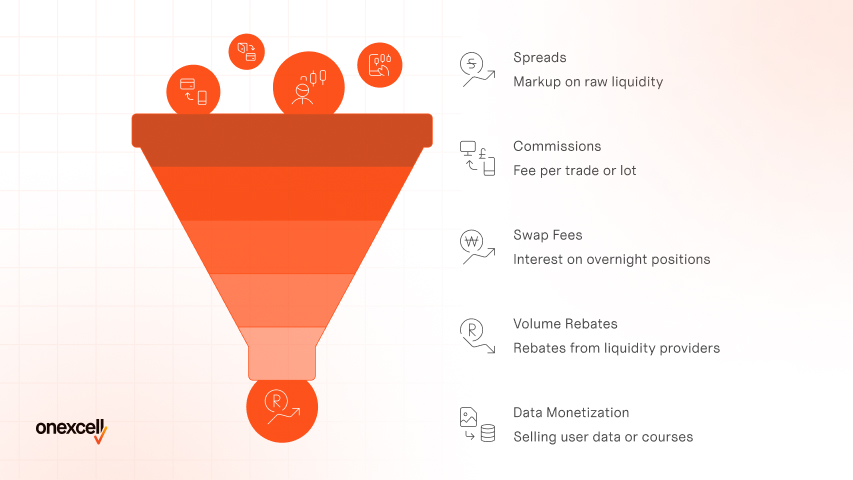
Forex brokerages make money by charging spreads, commissions, and swap fees, and sometimes by acting as a counterparty to client trades. They also generate income through volume rebates, education products, and additional services like trading signals or premium tools.
The ways forex brokerages make money include the following:
- Spreads: Markup over raw liquidity. The broker adds a small pip spread to the raw prices from liquidity providers. This is the most common model in market-making setups and carries moderate risk if the broker holds positions.
- Commissions: Charged per trade or lot. ECN/STP brokers typically charge a flat fee per trade or per lot traded. This model offers transparency and is preferred by institutional traders.
- Swap/Overnight Fees: Interest on open positions. Brokers charge or pay interest when a client holds a position overnight, depending on the currency pair and trade direction. This revenue is impacted by central bank rates and liquidity agreements.
- Volume Rebates from Liquidity Providers: Paid back based on client trading volume. Brokers who pass orders to liquidity providers may receive monthly volume rebates, reducing their own cost of execution. This incentivises high-volume clients or scalpers.
- Data Monetisation or Training Products: Selling user data or courses. Some brokers sell anonymised data or offer paid educational content, mentorship, or proprietary tools. These are low-risk revenue streams with high margins.
Is Opening A Forex Brokerage Still Profitable In 2026?
Yes, opening a forex brokerage is still profitable in 2026, but it requires sharp execution and cost control. The global forex market’s daily trading volume averages around $7.51 trillion, and OTC volume rose 15.2% between October 2024 and April 2026, according to the Federal Reserve Bank of New York. These numbers show that liquidity and market activity remain strong.
However, margin compression and rising tech competition are serious headwinds. As more entrants adopt low‑latency infrastructure and tighter spreads, profitable margins shrink. So only those brokers who can deliver scale, operational efficiency, strong branding, and value‑added services will capture lasting profits.
What Are The Main Types Of Forex Brokerages You Can Start?
The main types of forex brokerages you can start are market maker (dealing desk), STP/ECN (non-dealing desk), and hybrid models. Each model has different risk levels, revenue structures, and technology requirements depending on how trades are executed and routed. They also require different forex trading websites.
The main types of forex brokerages are explained below:
Market Maker (Dealing Desk) Broker
A Market Maker (Dealing Desk) broker is a type of forex brokerage that takes the opposite side of client trades, meaning it executes orders internally rather than routing them to external liquidity providers. This is often referred to as operating a B-book. In this model, the broker profits when clients lose and incurs a loss when clients win, making risk management crucial.
Market makers offer fixed spreads and fast execution, which appeals to beginner traders, but they carry higher risk and regulatory scrutiny, especially if the brokerage lacks proper hedging strategies.
Successful market makers invest in risk engines, trade monitoring systems, and data analysis tools to manage exposure and identify when to A-book (pass trades through) versus B-book. While it is highly profitable, poor execution or dishonest dealing quickly damages trust and reputation.
Stp/Ecn (Non-Dealing Desk) Broker
An STP/ECN (Non-Dealing Desk) broker routes client orders directly to liquidity providers (LPs) without intervening in the execution process. This model provides transparent pricing, often with raw spreads and a fixed commission, making it popular among professional and high-volume traders.
Because trades aren’t held internally, there’s a lower risk of conflict of interest, and brokers earn regardless of whether clients win or lose. While profit margins are slimmer compared to market makers, this model carries lower risk exposure and typically attracts a more trust-driven, loyal client base.
Hybrid Broker Model
A Hybrid Broker Model combines both A-book (STP/ECN) and B-book (market maker) execution, allowing brokers to route trades based on client behaviour and risk profiles. Using smart routing technology and trade analytics, the system can automatically B-book unprofitable or high-risk clients while A-booking profitable or high-volume traders to external liquidity providers.
This model offers flexibility, optimised risk management, and the ability to maximise profits while reducing exposure. It requires advanced infrastructure like risk engines, CRM integration, and trade surveillance tools to make real-time routing decisions based on trader performance data.
Need to ask Something else?
Use the form here to send us your question. We’ll reply within one business day.
What Licenses Do You Need To Start A Forex Brokerage?
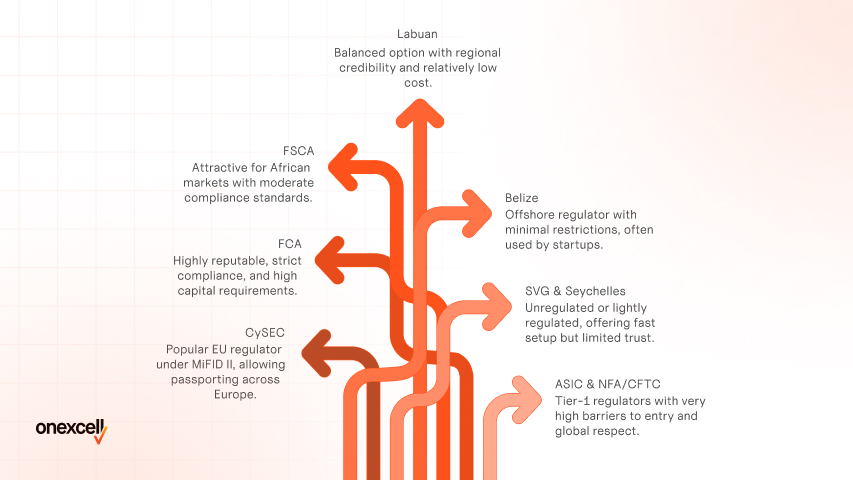
The licenses you need to start a forex brokerage are a forex broker license issued by a financial regulator in a recognised jurisdiction. These licenses allow you to operate legally, gain client trust, and access banking and liquidity services.
Regulated brokers are licensed by authorities like the FCA (UK), CySEC (Cyprus), or FSCA (South Africa) and must meet capital, reporting, and compliance standards. Unregulated brokers, registered in offshore jurisdictions like St. Vincent & the Grenadines (SVG) or Seychelles, face fewer requirements but have lower credibility and limited banking options.
Common regulatory licenses you need to start a forex brokerage include:
- CySEC (Cyprus): Popular EU regulator under MiFID II, allowing passporting across Europe.
- FCA (UK): Highly reputable, strict compliance, and high capital requirements.
- FSCA (South Africa): Attractive for African markets with moderate compliance standards.
- Labuan (Malaysia): A balanced option with regional credibility and relatively low cost.
- Belize: Offshore regulator with minimal restrictions, often used by startups.
- SVG & Seychelles: Unregulated or lightly regulated, offering fast setup but limited trust.
- ASIC (Australia) and NFA/CFTC (USA): Tier-1 regulators with very high barriers to entry and global respect.
The table below shows the forex broker license and its features:
| Jurisdiction | License Cost | Capital Requirement | Timeframe | Credibility |
| FCA (UK) | £25,000+ | £730,000 (dealing) | 6–12 months | Very High (Tier 1) |
| CySEC (Cyprus) | €20,000–€30,000 | €150,000+ | 4–6 months | High (EU passport) |
| FSCA (South Africa) | ~ZAR 50,000 | ZAR 1 million+ | 3–6 months | Moderate–High |
| Labuan (Malaysia) | $25,000–$35,000 | $125,000 | 3–4 months | Moderate |
| Belize | $5,000–$10,000 | $100,000 | 2–3 months | Low–Moderate |
| Seychelles | $3,000–$6,000 | $50,000 | 1–2 months | Low–Moderate |
| SVG | ~$1,500 | None | 1–2 weeks | Very Low (Unregulated) |
MiFID II (EU directive) ensures client fund protection and cross-border compliance in the EU. ASIC regulates brokers in Australia with strong consumer protections. NFA/CFTC oversees US forex brokers and imposes the world’s strictest operational, capital, and reporting rules.
Which Is The Best Jurisdiction To Register A Forex Broker?
The best jurisdiction to register a forex broker depends on your budget, target market, risk appetite, and long-term business goals. If you’re aiming for maximum trust and institutional credibility, then Tier 1 regulators like the FCA (UK) or ASIC (Australia) are the best choice; however, they require high capital (up to £730,000) and rigorous compliance.
For a more balanced setup, CySEC (Cyprus) and FSCA (South Africa) offer moderate capital requirements, EU access (via MiFID) or regional trust, and incorporation within 3–6 months.
If you need fast setup and lower upfront costs, offshore jurisdictions like St. Vincent & the Grenadines or Seychelles allow brokers to launch within 2–4 weeks, often with tax advantages and minimal reporting. However, these come with low credibility, banking restrictions, and payment service provider (PSP) issues.
Choose your jurisdiction based on how you want to position your brand in the global market.
What Are The Steps To Open A Forex Brokerage?
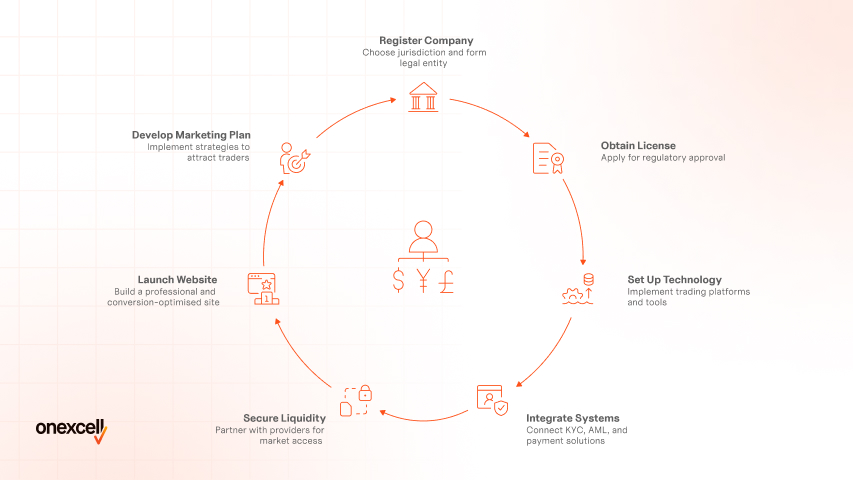
The steps to open a forex brokerage are registering your company, obtaining the required license, setting up trading technology, and integrating KYC, CRM, and payment systems. Once your infrastructure is ready, you’ll need to secure a liquidity provider, launch your website, and implement a marketing plan to attract traders.
Here are the key steps to open a forex brokerage:
- Register Your Company: Choose a jurisdiction and register your business as a legal entity. This is the foundation for obtaining licensing, opening a corporate bank account, and signing contracts with tech providers. Depending on the location, company formation can take from a few days to several weeks.
- Obtain a Forex Broker License: Apply for a license through the appropriate regulatory body, such as the FCA, CySEC, or FSCA. You’ll need to submit documentation, including a business plan, compliance procedures, and proof of capital. The process takes anywhere from 2 to 12 months based on the jurisdiction.
- Set Up Trading Technology: Choose between a white-label platform or a custom trading infrastructure (e.g., MT4/MT5, CRM, bridge, liquidity routing). This includes backend tools, client dashboards, and integrations with your liquidity providers. Ensure your tech stack supports fast execution and real-time data.
- Integrate KYC, AML, and Payment Systems: Partner with KYC/AML providers like SumSub or Veriff and payment gateways such as Stripe or B2BinPay. These tools are essential for onboarding traders securely and handling deposits and withdrawals efficiently. Proper integration also ensures you remain compliant with regulatory obligations.
- Secure Liquidity Providers: Connect your platform to one or more LPs offering access to the interbank market. Negotiate spreads, commission structures, and volume rebates based on your expected trading volume. Ensure the liquidity is deep, stable, and responsive to protect your clients’ execution quality.
- Launch Your Website and Branding: Build a fast, secure, and conversion-optimised brokerage website that reflects your brand and business model. It should include registration, login, client dashboards, and educational resources. A professional front-end builds trust with traders and supports onboarding.
- Develop a Marketing and Acquisition Plan: Set up advertising, SEO, affiliate programs, and IB (Introducing Broker) networks to bring in new clients. Use a CRM to track leads, run campaigns, and segment user types. Without an acquisition strategy, even the best platform will struggle to gain traction.
How Much Does It Cost To Start A Forex Brokerage In 2026?
Starting a forex brokerage in 2026 costs anywhere from £30,000 to over £250,000, depending on your business model, jurisdiction, and technology stack. In the planning phase, expect to spend £2,000–£5,000 on market research, legal consultations, and drafting your business plan.
During incorporation, company registration and licensing can range from £1,500 in offshore jurisdictions to over £100,000 for Tier 1 licenses like the FCA, including legal fees, regulatory capital, and compliance systems.
For the launch phase, costs include £10,000–£50,000 for a white-label setup or £75,000–£150,000+ for a custom-built platform with CRM, payment integrations, and liquidity connections.
Finally, a minimum £5,000–£15,000+ monthly marketing budget is required for advertising, partnerships, SEO, and affiliate programs. Each phase builds on the last, so underfunding one area can delay or weaken your overall launch.
What Capital Requirements Must You Meet To Start A Brokerage?
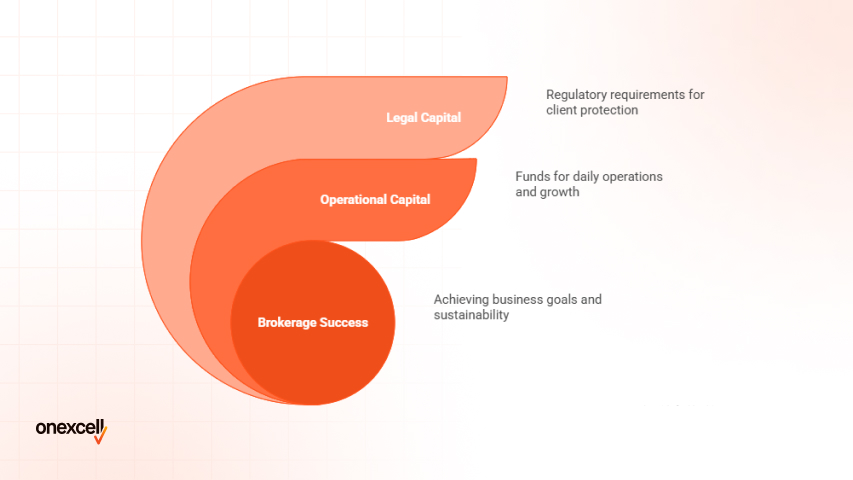
To start a forex brokerage, you must meet both legal capital requirements set by regulators and real-world operational capital needed to sustain your business. Regulatory capital ensures you have enough funds to protect client deposits and maintain financial stability, while operational capital covers your day-to-day costs like staff, marketing, and technology.
Here are the capital requirements you must meet to start a brokerage:
1. Legal Capital Requirements:
- EU (CySEC/MiFID): €125,000 for STP (non-dealing desk), €730,000 for market maker licenses.
- FCA (UK): £125,000–£730,000 depending on license type.
- Belize: $100,000 paid-up capital.
- Seychelles/SVG: Low to no minimum capital, but often requires proof of funds.
2. Operational Capital Needs:
- Marketing: At least £5,000–£15,000/month for acquisition and brand awareness.
- Tech Stack: Ongoing platform, server, CRM, and LP costs ranging £3,000 to £10,000/month.
- Staffing and Support: £2,000–£10,000/month for account managers, compliance, and customer service.
- Monthly Burn Rate: Realistically, plan for £10,000–£30,000/month to maintain operations in the first 6–12 months.
Having enough capital to survive beyond your launch is just as important as meeting regulatory minimums.
What Technology Do You Need To Start A Forex Brokerage?
The technology you need to start a forex brokerage includes everything from the trading platform and CRM to security, compliance, and user onboarding tools. Each layer plays a vital role in ensuring your operations are secure, scalable, and trader-ready from day one.
- Trading Platform (MT4, MT5, or cTrader): This is the core of your brokerage where clients trade. Choose a white-label or full license depending on budget and control needs.
- CRM/Back Office: Manages client data, trading activity, deposits, KYC status, and communication. Essential for customer service and internal reporting.
- Risk Engine: Monitors exposure, order flow, and trader behaviour to protect your capital. Helps decide when to A-book or B-book trades.
- Affiliate/IB System: Tracks referrals, commissions, and performance of introducing brokers or partners. Supports growth through marketing partnerships.
- KYC Onboarding: Tools like SumSub or Veriff automate identity verification, document checks, and AML screening. Required for compliance and fraud prevention.
- Hosting + DDoS Protection: Use secure VPS or dedicated servers to host your website, trading terminal, and backend tools. DDoS protection prevents downtime from malicious attacks.
What Is A White Label Forex Platform?
A white-label forex platform is a ready-made trading solution that allows a new brokerage to operate under its own brand without building a platform from scratch. It works by leasing access to an established trading system like MT4, MT5, or cTrader, where the technology provider handles the infrastructure while the broker focuses on branding, onboarding, and client management.
This model is ideal for startups, smaller brokerages, or marketing-driven firms that want a faster, lower-cost entry into the forex market without heavy development or regulatory overhead. While it offers limited backend control compared to custom builds, it significantly reduces time to market and upfront investment.
Should You Build Your Own Platform Or Use White Label?
You should use a white-label platform if you’re looking for a quick, cost-effective launch with minimal technical setup. It’s best for brokers focused on marketing, client acquisition, or testing the market before scaling.
On the other hand, building your own forex trading platform gives you full control, ownership, and flexibility, but requires a much higher budget, longer development time, and ongoing tech management. Custom platforms suit established brokers aiming to differentiate, offer unique features, or integrate deeply with third-party systems.
What Are The Best Forex Trading Platforms In 2026?
The best forex trading platforms in 2026 are MetaTrader 5 (MT5), cTrader, and DXtrade, each offering unique advantages in execution, usability, and broker control. Your choice depends on your target traders, platform flexibility, and backend integration needs.
The best forex trading platforms in 2026 are explained below:
- MetaTrader 5 (MT5): MT5 is the industry standard for multi-asset trading, offering advanced charting, Expert Advisors (EAs), and robust mobile/web access. It’s widely supported by liquidity providers and preferred by both retail and institutional brokers.
- cTrader: Known for its sleek UI and institutional-grade execution, cTrader supports ECN/STP brokers looking for transparency and low latency. It also comes with built-in copy trading and rich analytics tools.
- DXtrade: A newer alternative offering full broker-side control, modular UI, and better web accessibility than traditional platforms. It’s ideal for brokers seeking a more customisable experience without the legacy limitations of MT systems.
How Do You Choose The Right Liquidity Provider?

You choose the right liquidity provider by evaluating a mix of pricing transparency, execution quality, technology integration, and regulatory status. Start by ensuring the provider offers competitive spreads and fast execution speeds, especially during high-volatility periods.
Check if they support FIX API or bridge integration with your trading platform (e.g., MT5, cTrader), and confirm the depth of their order book and quote reliability. Reputable LPs will also offer negative balance protection, volume-based rebates, and a strong Tier 1 banking network. It’s also important to assess their regulatory oversight. LPs regulated by top-tier bodies (like FCA, ASIC, CySEC) offer more credibility.
Finally, make sure the provider has 24/5 technical support, flexible account types (ECN, STP), and settlement processes that align with your business model. Proper due diligence avoids future slippage, requotes, or trust issues.
How Do You Register And Incorporate A Forex Brokerage Legally?
You register and incorporate a forex brokerage legally by choosing a jurisdiction, fulfilling the legal requirements, submitting incorporation documents, and obtaining the necessary forex brokerage license.
This process varies depending on whether you’re incorporating in a Tier 1, mid-tier, or offshore jurisdiction, and affects how long it takes, how much it costs, and how credible your business will appear.
First, you select the country where your brokerage will be incorporated. This will determine your capital requirements, tax obligations, compliance burden, and PSP (payment service provider) options.
Next, you work with a legal or corporate services firm in that jurisdiction to file incorporation documents like shareholder information, business purpose, and proof of office. Then, you submit your license application with the local regulator (e.g., FCA in the UK, CySEC in Cyprus, FSA in Seychelles), often needing to include a business plan, risk policy, KYC/AML procedures, proof of funding, and details about your directors and technology stack.
Once approved, you’re legally allowed to operate as a forex brokerage. Keep in mind: even if you register offshore, PSPs and liquidity partners may still ask for proof of KYC systems and client fund protection.
What Mistakes Should You Avoid When Starting A Forex Brokerage?
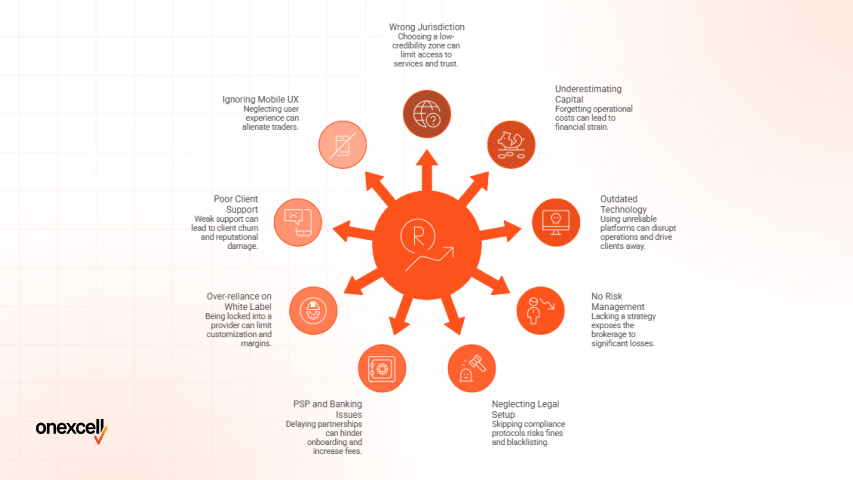
Here are the key mistakes you should avoid when starting a forex brokerage, especially in 2026 when regulation and competition are tighter than ever:
- Choosing the Wrong Jurisdiction: Registering in a low-credibility offshore zone might save you money upfront, but it can limit your access to reliable payment providers, bank accounts, and credibility with clients. Always balance cost with regulatory trust.
- Underestimating Capital Requirements: Many new brokers focus only on license fees and tech setup, forgetting operational costs like payroll, liquidity margins, marketing, and customer support. You need working capital for at least 6–12 months of runway.
- Using Unverified or Outdated Technology: Going with a cheap or outdated trading platform (or CRM) can break your operations and drive away clients. Always test vendor platforms, check for MT4/MT5 licenses, and ensure mobile readiness.
- No Clear Risk Management Strategy: Without a proper B-book/A-book routing system and risk engine, you expose yourself to massive losses if clients win big. Your backend needs to intelligently manage trade flow and exposure.
- Neglecting Legal & Compliance Setup: KYC, AML, GDPR, and transaction reporting aren’t optional. Skipping legal protocols puts you at risk of fines or blacklisting from PSPs and banks.
- Lack of PSP and Banking Readiness: Some brokers launch their site before confirming payment gateway or bank partnerships. This can delay onboarding and force high-fee emergency solutions.
- Relying Too Heavily on White Label Providers: White-label platforms are fast but lock you into their tech and pricing. If you’re not careful, it can limit customization and reduce your margins long-term.
- Poor Client Support and Retention Plans: The first clients often come through referrals or affiliates. If your support is weak or your backend crashes, they’ll leave—and hurt your reputation in forums.
- Ignoring Mobile and UX Design: Traders expect fast, responsive mobile dashboards and clean UI. Don’t invest in backend only and forget front-end user experience.
What Are The Best Forex Crm Systems For Brokerage Management?
The best Forex CRM systems for brokerage management in 2026 include the following:
- B2Core (by B2Broker): Offers a robust, modular CRM with trader cabinet, back office, IB portal, KYC integration, and PSP plugins. Designed for both startups and scaling brokers, it supports MetaTrader and cTrader integrations. Pricing can be high, but it comes with white-label add-ons and full support.
- UpTrader CRM: A popular white-label CRM system tailored for Forex brokers with MT4/MT5. Includes a user-friendly interface, IB management, marketing tools, and deposit/withdrawal systems. Suitable for smaller brokers seeking fast deployment.
- Dynamic Works Syntellicore: Full enterprise-level CRM platform that covers lead tracking, sales funnel, compliance, and multi-language support. Used by larger regulated brokers who want to control every aspect of operations in-house.
- Leverate (LXCRM): Integrated with their Sirix trading platform, LXCRM is known for detailed analytics, affiliate tracking, and real-time reporting. It’s an all-in-one CRM suited for brokers who also want a platform and liquidity bundled.
- TradeCore: A cloud-based fintech CRM offering APIs for onboarding, KYC, account management, and compliance. It’s ideal for tech-savvy teams who want flexible integration rather than off-the-shelf features.
- SanSoft CRM: More budget-friendly but feature-rich for emerging brokers. Supports multiple PSPs, MT4/MT5 connectivity, and a built-in affiliate system. Lacks the polish of enterprise tools but does the job for startups.
- CRM by Your Bourse: Geared towards performance and automation, this CRM is useful for brokers wanting detailed control over reporting, routing, and latency. Works well with your Bourse liquidity and bridge services.
Each CRM varies in pricing model (subscription vs license), flexibility, and support for integrations. When choosing, focus on scalability, support levels, and how well it connects with your trading platform and KYC/PSP stack.
Can You Start A Forex Brokerage Without A License?
Yes, you can technically start a forex brokerage without a license, but it comes with significant risks and limitations.
Operating without a regulatory license might seem faster and cheaper upfront, but it restricts your ability to access reliable payment processors, gain client trust, advertise on major platforms, or partner with reputable liquidity providers.
Most PSPs and banks will deny service to unlicensed brokers due to anti-money laundering (AML) concerns. Also, many jurisdictions treat unlicensed forex activity as illegal or subject to heavy fines and even criminal penalties.
Several offshore locations, like Saint Vincent and the Grenadines (SVG) or the Marshall Islands, do not regulate forex brokers, which is why many new entrants register there. But these jurisdictions offer no protection or oversight, and many forex review sites and comparison platforms now blacklist unlicensed brokers.
If your long-term goal is to attract real clients, build partnerships, and avoid compliance shutdowns, obtaining at least a mid-tier license (like FSCA or CySEC) is strongly recommended.
How Do You Build A Forex Brokerage Website That Converts?
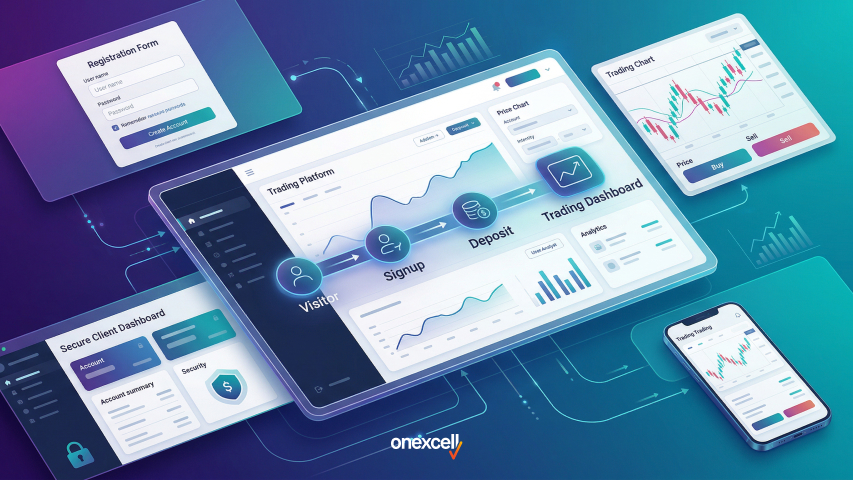
You build a forex brokerage website that converts by combining trust-building design, smooth user experience, and performance-driven infrastructure. Your homepage should immediately communicate legitimacy with clean visuals, regulatory badges, real client testimonials, and fast page load speeds.
Navigation must be intuitive, especially for key flows like account registration, funding, and live trading access. Every page should support conversion by guiding users toward your goals, whether it’s signing up, depositing funds, or contacting support.
Equally important is mobile responsiveness and localization. In 2026, over 65% of traders access platforms via smartphones, so your forex web design must be optimized for mobile. You also need clear CTAs, multilingual support, and geotargeted compliance pop-ups where needed.
For backend, real-time quote streaming, secure client dashboards, and strong encryption ensure your tech matches user trust expectations. Combine this with proper Google Tag Manager, heatmaps, and A/B testing tools to track how users behave and optimize continuously.
Can You Start A Forex Brokerage As An Individual?
Yes, you can start a forex brokerage as an individual, but it depends on your goals, jurisdiction, and resources. While there’s no law that prevents individuals from founding brokerages, the real-world complexity of regulation, licensing, liquidity sourcing, and tech infrastructure means most successful brokerages are structured as companies.
Starting as an individual might work for white-label setups, but scaling requires transitioning to a full business entity.
Can I Open A Forex Brokerage With No Experience?
Yes, you can open a forex brokerage with no prior experience, but it’s highly risky unless you partner with experts or use a turnkey solution. The forex industry is complex, fast-moving, and heavily regulated, which makes insider knowledge critical for long-term success.
If you’re a newcomer, starting with a white-label platform like MetaTrader or cTrader lowers the learning curve. These providers often offer bundled services like liquidity, CRM, KYC tools, and compliance support.
However, without a clear understanding of market structure, compliance, and trader psychology, you’re likely to make costly mistakes, like choosing the wrong jurisdiction, pricing your spreads incorrectly, or failing at user acquisition.
To succeed without experience, consider hiring industry consultants, legal advisors, and tech partners to guide every step.
What Is The Cheapest Way To Start A Forex Brokerage?
The cheapest way to start a forex brokerage is by using a white-label solution combined with an offshore license and pre-configured technology stack. This setup can cost as little as $15,000 to $30,000 upfront, depending on your provider, chosen jurisdiction (e.g., SVG or Seychelles), and what’s bundled in your package (platform, CRM, liquidity, website, etc.).
White-label providers handle the heavy lifting, like MetaTrader setup, server maintenance, and liquidity integration, so you can launch quickly without hiring a full development team. While this low-cost path is ideal for testing the waters, it comes with tradeoffs like lower flexibility, limited custom branding, and increased reliance on third parties for operations and compliance.