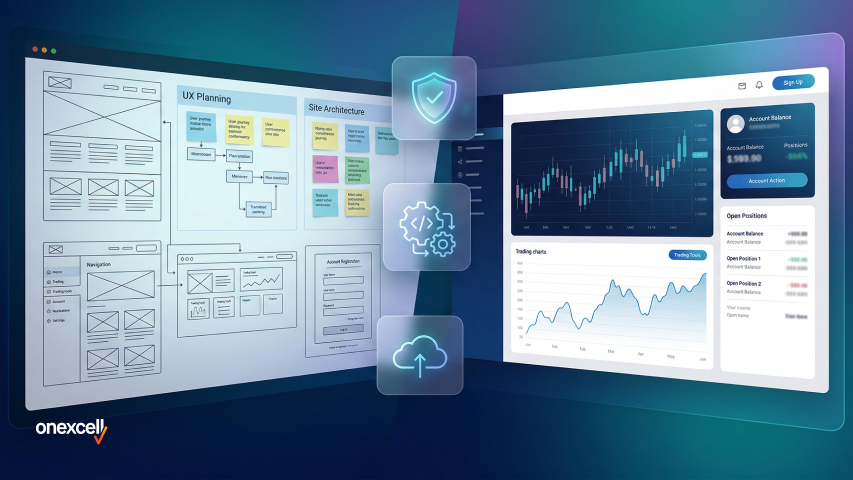
You can build forex broker websites such as affiliate/CPA marketing sites, forex signal websites, trading education platforms, and market news or analysis blogs. Each serves a different goal, like client acquisition, content monetisation, lead generation, or trader engagement.
The core essential features of a forex website include real-time forex chart widgets, MT4/MT5 platform integration, user dashboards, KYC onboarding, and economic calendar feeds. These tools are essential for performance, trust, and meeting compliance standards.
You build a forex website by planning your platform goals, choosing a CMS or custom stack, integrating trading APIs, and setting up security and compliance layers. After design and development, test for speed, responsiveness, and user experience before launching.
A basic forex website costs £500–£2,000, a mid-tier broker platform costs £5,000–£15,000, and full-featured custom builds can exceed £30,000–£50,000. Final pricing depends on design, features, compliance scope, and hosting infrastructure.
A forex website maintenance requires regular plugin updates, server monitoring, security patches, and KYC system renewals. You can manage this in-house or via a support retainer to avoid downtime, bugs, or compliance failures.
What Types Of Forex Websites Can You Build?

The types of forex websites you can build include brokerage websites, affiliate/CPA marketing sites, forex signal providers, education platforms, and market news or analytics blogs. A forex broker site is designed for account onboarding, KYC, and platform integration, with the primary goal of client acquisition and trust-building.
An affiliate forex program or CPA marketing site focuses on driving traffic to brokerages, monetising through commissions and referrals. A forex signal website delivers trade alerts and strategy insights, aiming to build credibility and subscription-based revenue.
A trading education site targets beginners and intermediate traders, selling courses, memberships, or training services while building authority. Lastly, a forex blog or news portal provides ongoing analysis, charts, and commentary to engage users, enhance SEO, and strengthen branding.
For those seeking a quick launch, a white-label forex solution allows entrepreneurs to enter the market with ready-made infrastructure but still requires proper positioning for long-term success.
What are the Essential Features for a Professional Forex Trading Website?
The essential features of a professional forex trading website are secure client dashboards, real-time chart widgets, trading account comparison pages, and smooth KYC onboarding. Other must-haves include multi-language support, forex CRM integration, fast hosting, and compliance displays to build trust and ensure a smooth user experience.
The following are essential features of a professional forex website:
1. User Interface (UX) Tools:
- Live forex charts: Allow traders to monitor movements in real time, building transparency and trust.
- Real-time price feeds: Keep data accurate to the second, which is critical for credibility and fair execution.
- User dashboard: Centralises account info, balances, and positions, making the site intuitive and professional.
2. Backend Infrastructure:
- MT4 integration: Ensures traders can connect seamlessly with the most widely used trading platform.
- Forex platform tools: Provide advanced functionalities like order management and trade execution, supporting reliability at scale.
3. Compliance Features:
- KYC verification: Protects both broker and trader by preventing fraud and meeting financial regulations.
AML policy modules: Reinforce legitimacy by showing alignment with anti-money laundering standards.
4. Analytics & Market Tools:
- Economic calendar: Keeps traders informed of key market events, improving engagement and positioning the site as a trusted resource.
Performance analytics: Offer clients insights into their trading history and behaviour, reinforcing transparency.
Together, these features ensure a forex site isn’t just functional but compliant, trustworthy, and capable of scaling with user demand.
How Do You Build A Forex Website?
You build a forex website by choosing a secure hosting provider, setting up the site structure, and integrating trading platforms like MT4 or MT5. From there, you add compliance modules such as KYC, design the user dashboard, and connect real-time price feeds and analytics tools for full functionality.
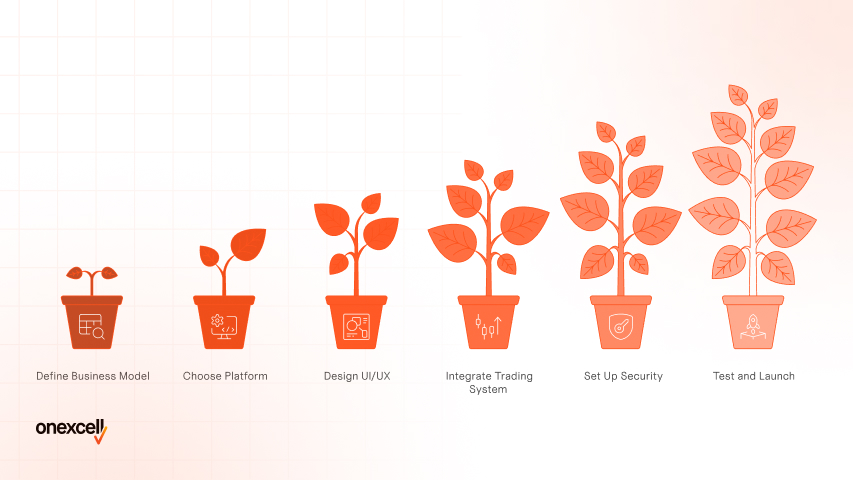
The steps to build a forex website include the following:
- Define your business model and audience: Decide if you’re building a full brokerage setup, an affiliate site, or a trading education portal. Clarify your regulatory jurisdiction, trader persona, and required features.
- Choose your platform and infrastructure: Select between a custom forex CMS, WordPress, or a white-label solution, depending on budget and control needs. Set up fast, secure hosting for your forex site with strong uptime guarantees.
- Design your UI/UX and site layout: Plan an intuitive frontend design, including navigation, trading dashboards, and mobile responsiveness. Prioritise user trust, visual clarity, and conversion paths.
- Integrate your trading system: Add MT5 integration, real-time forex chart widgets, and liquidity bridge connections. Ensure smooth login, order execution, and market data sync.
- Set up security and compliance layers: Implement KYC onboarding, AML policy tools, and SSL certificates. Use secure back-end structures and role-based access controls to protect user data.
- Test, optimise, and launch: Review speed, accessibility, and mobile compatibility. Deploy with proper tracking tools and backup protocols.
For a professionally built, secure, and conversion-ready forex website, it’s best to work with an experienced web partner like Onexcell, who understands both the tech and compliance sides of the forex industry.
How Should You Structure Your Forex Website’s Key Pages?
You should structure your forex website’s key pages by starting with a clear homepage layout that highlights your platform features, trading advantages, and includes above-the-fold CTAs to drive signups or demo accounts.
Next, create dedicated trading account pages outlining account types, spreads, and leverage options, followed by a platform comparison page (MT4, MT5, cTrader) to guide platform selection.
Your site should also include an education hub for traders (videos, tutorials, glossaries) and a forex landing page structure that supports SEO with clear headings, internal linking, and breadcrumb navigation.
Key compliance elements like legal disclosure, privacy policy, terms of use, and a visible risk warning must be linked in the footer and throughout the signup flow.
Strong internal linking between account pages, education content, and signup forms helps improve SEO for brokers, while a clean hierarchy keeps user journeys simple and conversion-focused.
What Is The Best Technology Stack For Building Your Forex Website?
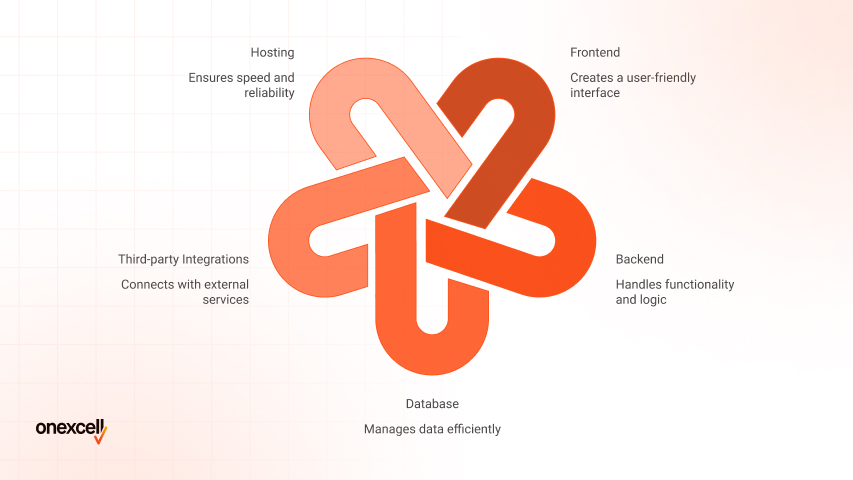
The best technology stack for building your forex website is a combination of a secure backend language, a responsive frontend framework, integration tools, and forex CRM systems. For content and scalability, many brokers also use a custom CMS or WordPress, paired with fast VPS hosting optimised for trading.
The following is the best technology stack for building your forex website:
1. Frontend (User Interface):
- React or Vue.js: Modern frameworks like React for brokers offer fast loading times and smooth UX for dashboards, charts, and forms.
- HTML5/CSS3 + Bootstrap: Ideal for responsive forex site design and mobile-first performance.
2. Backend (Functionality & Logic):
- Node.js or PHP: Both support secure, scalable development; Node.js backend offers speed, while PHP remains widely supported by cPanel hosts.
- CRM integration: Must support user account creation, tiered access, and KYC workflows with smooth data flow.
3. Database (Data Handling):
- MySQL or PostgreSQL: Reliable, widely used for account info, trade history, and user management.
- NoSQL options (e.g., MongoDB): Useful if you’re handling dynamic data like signal feeds or user-generated content.
4. Third-party Integrations:
- MT4/MT5 API: Required for executing trades, syncing balances, and real-time chart updates.
- Liquidity bridges & trading platforms: Must be compatible with your backend stack and offer low-latency execution.
- Forex CMS or WordPress: Faster to launch but less customisable than a fully coded solution — good for affiliates or education sites.
- Hosting on AWS or VPS with cPanel: Ensures speed and reliability, with Kubernetes support for scalable traffic handling.
Which Trading Platform And Liquidity Integrations Does a Forex Website Need?
A professional forex website requires integration with major trading platforms like MT4, MT5, or cTrader — each offering unique features, plugins, and broker-side management.
MT4/MT5 integration remains the industry standard for retail traders due to their familiarity and robust trading tools, while cTrader is gaining popularity for its modern UI and built-in risk management options. More advanced setups may use FIX API or custom APIs to connect to internal trading engines or CRM systems for full control and automation.
Equally important is integrating with a liquidity provider, which supplies the pricing and execution flow. These can be STP (Straight Through Processing) or ECN (Electronic Communication Network) models, and they influence execution speed, slippage, and spread costs.
Popular liquidity aggregators and providers include B2Broker, Finalto, CFH Clearing, and Advanced Markets, all of which offer real-time price feed APIs and deep liquidity pools.
How Do You Ensure Security And Regulatory Compliance In A Forex Website?
You ensure security and regulatory compliance in a forex website by implementing multiple protection layers such as an SSL certificate, DDoS mitigation, 2FA login systems, end-to-end encryption, and secure firewalls to safeguard sensitive user data and trading activity. These measures prevent unauthorised access, phishing attacks, and data breaches — all critical in maintaining trader trust and platform stability.
On the compliance side, your website must align with financial regulations based on your operating region — whether that’s FCA (UK), CySEC (Cyprus), ASIC (Australia), or NFA (USA). Requirements include clear regulatory licensing, robust data protection protocols, and visible risk disclosures in line with MiFID II or equivalent frameworks.
KYC/AML (Know Your Customer / Anti-Money Laundering) checks are embedded during onboarding through identity document uploads, address verification, and user risk scoring, often powered by third-party integrations.
These systems not only ensure regulatory compliance but also help prevent fraud and protect your brokerage from legal exposure.
What Forex Website Design And Ux Considerations Drive User Trust And Conversions?
The forex website design and UX considerations that drive trust and conversions are responsive design, fast load times, above-the-fold CTAs, and visually credible layouts that speak directly to trader expectations.
A clean, conversion-focused design should prioritise clear navigation, mobile accessibility, and well-placed trust signals like testimonials, security badges, and regulatory authority logos (e.g., FCA, CySEC) on key pages.
Offering features like dark mode, live chat buttons, and accessible UI/UX for traders across all skill levels adds to the professionalism of the experience.
Use A/B testing to evaluate different signup flows, for example, comparing single-click demo registrations versus full onboarding forms, and adjust based on actual conversion data. By combining UX best practices with performance metrics, you create a site that feels credible, secure, and tailored to high-intent users.
How Much Does A Forex Website Cost?
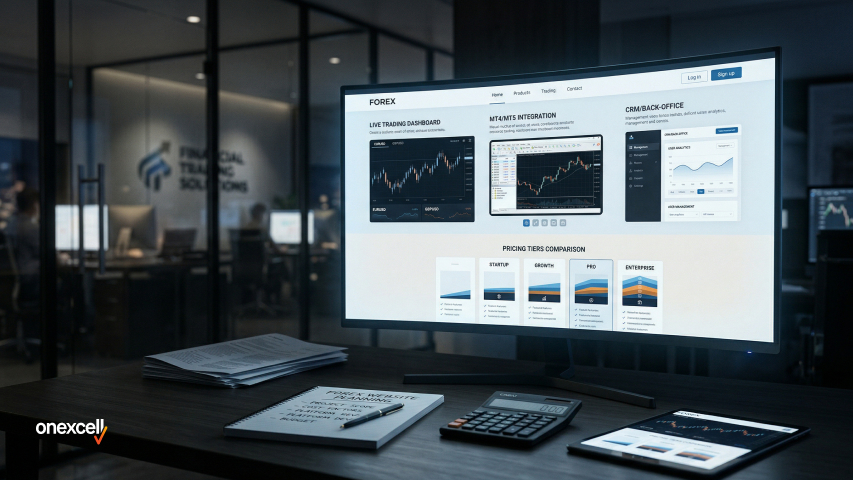
A forex website costs anywhere from £500 to over £50,000, depending on the build type, platform complexity, and regional compliance requirements. A simple DIY WordPress site with a template and basic plugins might start at £500–£2,000, while a typical custom broker website built by a mid-tier agency ranges between £5,000–£15,000.
A full-featured trading platform with MT4/MT5 integration, CRM systems, and KYC modules can exceed £30,000–£50,000, especially if you’re launching in multiple languages and under strict regulatory oversight.
Cost drivers include your choice of platform, number of features, required design customisation, forex CRM integration, hosting infrastructure, and whether you need real-time price feeds or third-party plugins.
Ongoing maintenance costs, updates, and licensing also factor in, so budget for both CAPEX (initial investment) and OPEX (monthly operations). Additional expenses like forex license fees, branded support portals, and trading dashboards can also push the price up for brokers aiming to scale quickly.
How Long Does It Take To Build A Forex Website?
It takes anywhere from 2 to 12+ months to build a forex website, depending on the complexity, features, and compliance scope. A simple affiliate site or education portal might take 2–4 months, a mid-tier broker site with MT4/MT5 integration and CRM can take 5–8 months, and a fully custom forex trading platform requires 9–12+ months of end-to-end development.
Typical build milestones include planning and requirements gathering (2–4 weeks), UX/UI design timeline (3–6 weeks), frontend/backend development (8–16 weeks), integration with trading platforms and KYC systems (4–10 weeks), and QA testing and compliance review (3–6 weeks).
Delays occur due to integration issues, custom plugin development, or extended regulatory approval cycles. A realistic development timeline accounts for these variables and builds in buffers for testing, feedback, and change requests.
How Do You Maintain Your Forex Website Successfully?
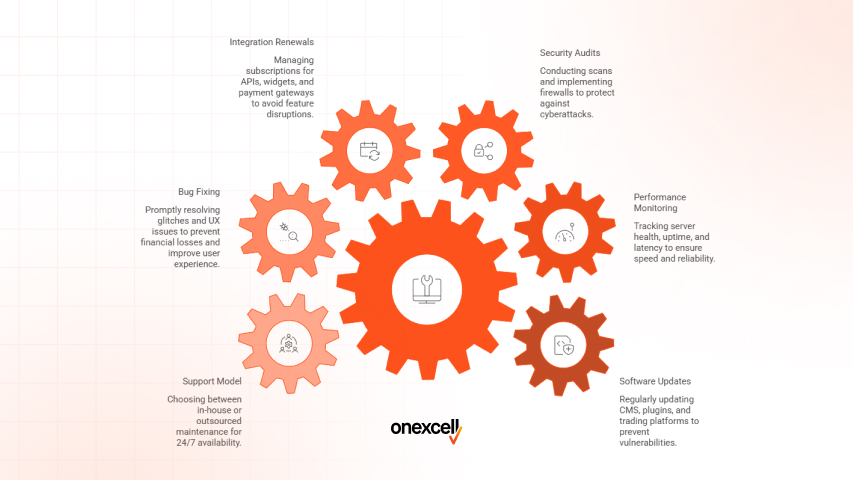
You maintain your forex website successfully by regularly updating software and plugins, monitoring site performance, and conducting security audits to prevent downtime or breaches. Ongoing tasks also include content updates, regulatory compliance checks, and real-time data monitoring to ensure your platform remains fast, safe, and fully functional.
Here’s a list of key maintenance tasks to manage your forex website successfully:
- Apply regular software and plugin updates: This includes core CMS updates, third-party plugin updates, and trading platform patches like MT4/MT5 upgrades. Outdated systems are vulnerable to security breaches and compatibility issues.
- Monitor server health and uptime: Use automated tools for uptime monitoring, CPU usage, and latency tracking. A slow or offline platform damages user trust and can directly impact trades.
- Run routine security checks and backups: Schedule scans for vulnerabilities, implement firewalls, and perform daily or weekly site backups. This ensures quick incident response in case of a cyberattack or data loss.
- Renew third-party integrations and licenses: APIs, chart widgets, payment gateways, and CRM tools have subscription-based models. Track renewal dates to prevent sudden feature drops.
- Fix bugs and UX issues quickly: Minor glitches can escalate into lost deposits or withdrawal errors. Fast resolution protects your brand and improves retention.
- Choose your support model: You can manage maintenance in-house with a dedicated dev team or outsource to an agency on a support retainer. Either way, 24/7 availability is key for high-traffic trading sites.
Downtime, slow speeds, or broken features can cost real money in lost trades or legal fines, so maintenance isn’t optional; it’s mission-critical.
What Content And Marketing Strategies Help Attract And Retain Forex Traders?
The content and marketing strategies that help attract and retain forex traders include publishing trading tutorials, sharing real-time economic news feeds, and offering actionable insights through blogs, videos, and platform guides.
Strong forex content marketing not only drives traffic but also boosts brand trust, especially when supported by SEO for brokers, keyword-targeted blog posts, and multilingual pages to reach global audiences.
You can amplify results through affiliate promotion, referral programs, and email funnels that nurture new leads into active traders. A dedicated copy trading community, educational content hub, and geo-targeted campaigns help differentiate your brand while improving long-term engagement. For brokers looking to scale, this strategy should be built into the core site structure from day one.
What Are The Emerging Trends Shaping Forex Websites Today?

The emerging trends shaping forex websites today are AI-driven analytics panels, real-time data visualisation, and mobile-first UX designed for multi-device trading. We’re also seeing growth in social trading features, crypto-fiat integration, and demand for multilingual, regulation-compliant platforms tailored to regional markets.
Here are key emerging trends shaping forex websites:
- AI trading tools and robo-advisory features: Brokers are integrating AI to offer predictive analytics, automated trade suggestions, and personalised dashboards. This increases user engagement and reduces decision fatigue, requiring websites to support dynamic real-time alerts and adaptive content.
- Social trading and copy trading ecosystems: Platforms now let users follow, copy, or discuss trades with others in real time. Websites must integrate leaderboards, trader profiles, and social proof components to meet this growing demand.
- Mobile-first UX and lightweight architecture: With the majority of users trading on phones, responsive interfaces, fast loads, and mobile-optimised dashboards are now baseline requirements. Poor mobile performance directly impacts retention and conversion.
- Gamification and interactive learning: Quizzes, badges, leaderboards, and trading simulators are being used to keep users engaged and invested in the platform. Websites need to support modular and interactive UX layouts to deliver this experience.
- Web3 wallets and blockchain payment support: More platforms are experimenting with crypto-fiat wallets, decentralised identity, and blockchain-based trade validation. Your backend must be flexible enough to integrate secure Web3 wallets and compliance layers.
- Voice search and conversational UI: As voice assistants grow more popular, traders expect to query economic calendars or signal updates hands-free. Forex websites must begin planning for voice-friendly navigation and NLP-ready infrastructure.
To remain future-proof, use brands like Onexcell to design forex websites that evolve alongside these innovations.
Can I Build A Free Forex Website?
Yes, you can build a forex website using a free website builder, but it comes with serious limitations in terms of branding, performance, and security. Free plans lack SSL certificates, have slow hosting speeds, and don’t support critical features like forex platform integration, KYC onboarding, or custom dashboards.
These sites typically carry platform watermarks, offer minimal design control, and pose data privacy risks, especially if you’re handling trader registrations or financial information. While starting with a free setup can help test an idea or build a basic presence, most brokers quickly outgrow it.
A smarter approach is to move from free, freemium, full paid hosting, upgrading in stages as you need more control, compliance tools, and professional support. For anything beyond a simple landing page, paid solutions for forex web design are essential to meet industry standards and user expectations.
How Secure Is My Data And Trades?
You can secure your data and trades by using SSL encryption, secure server hosting, and industry-grade firewalls to protect all transactions and user information. Adding two-factor authentication (2FA), routine security audits, and encrypted trading APIs ensures both platform integrity and trader trust.
Here’s how to secure your forex data and trades:
- SSL certificates: All data transmitted between your browser and the server is secured using SSL encryption, preventing interception or tampering by third parties.
- Encrypted logins and passwords: User credentials are encrypted at rest and in transit, safeguarding your personal and financial information from brute-force attacks.
- Two-factor authentication (2FA): Added login security ensures that only verified users can access accounts, even if passwords are compromised.
- Firewall protection and intrusion detection: Enterprise-grade firewalls monitor and block unauthorised access attempts, while detection systems flag suspicious behaviour in real time.
- Account segregation and KYC protocols: User funds are kept separate from operational accounts, and onboarding is enforced through strict KYC (Know Your Customer) checks to ensure identity legitimacy.
- Trade execution safety: All trades are processed via secure APIs, using encrypted communication channels and audited transaction logs for full traceability.
This layered approach to data encryption, trade execution safety, and compliance monitoring is what makes forex platforms trustworthy and secure for both beginners and high-volume traders.