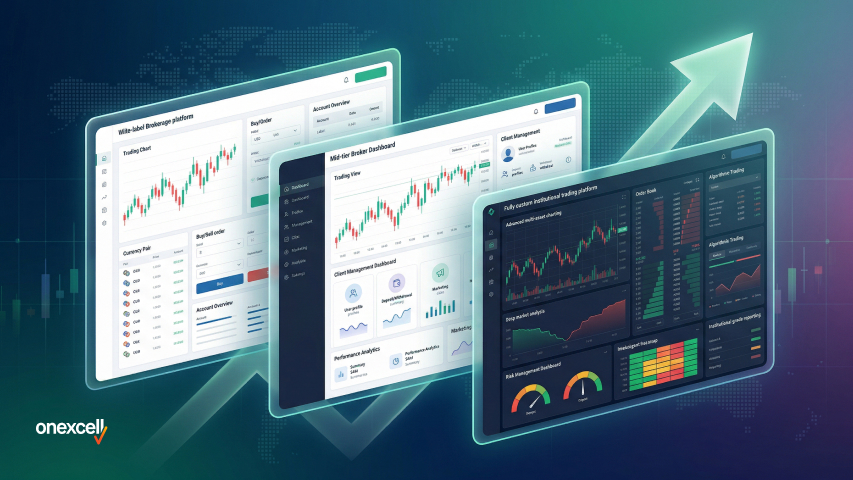
A forex brokerage website is the online platform that allows traders to register, deposit funds, and execute currency trades through the brokerage’s infrastructure. It connects to trading servers, CRMs, liquidity providers, and payment systems to facilitate real-time trading activity.
The core components of a forex brokerage website include a trader dashboard, admin panel, KYC onboarding, payment gateway integration, CRM, affiliate portal, and real-time execution engine. These systems must work together securely to deliver a seamless user and broker experience.
A forex brokerage website costs between £50,000 and £150,000+ to build a forex website from scratch, depending on whether you’re creating a custom platform or integrating tools like MetaTrader, FIX APIs, and multi-language support. Custom development offers full ownership but requires high upfront investment and longer timelines.
It takes 2 to 6 weeks to launch a white-label forex brokerage, while a fully custom-built platform can take 4 to 12 months. Timeline depends on licensing, development resources, integrations, and regulatory approval.
According to the Bank for International Settlements (2022), global forex trading volume exceeds $7.5 trillion per day, making the industry highly lucrative but competitive for new brokerages.
What Is A Forex Brokerage Website?
A forex brokerage website is the front-end and back-end platform that enables retail traders to open accounts, deposit funds, and trade currencies through your brokerage. It includes the client-facing interface (like the trader dashboard, registration, and deposit pages) and connects to the brokerage infrastructure behind the scenes.
A forex broker website includes the CRM, MetaTrader trading servers, liquidity bridge, ECN routing, and compliance tools. Essentially, it’s the central hub that links your clients to your trading operations in real-time.
How Does a Forex Brokerage Website Work?
A forex brokerage website works by guiding a user through a simple process: the client registers an account, deposits funds, and starts trading currencies via the connected trading platform, such as MT4 or MT5.
When a trader places an order, the system routes it through either a Dealing Desk (DD) model, where the broker can take the opposite side of the trade, or a No-Dealing Desk (NDD) model, where trades are passed directly to the liquidity provider using ECN or STP routing.
The broker earns revenue through spread markups or commissions on each trade, and the platform automatically calculates profits or losses based on price movements, lot size, and execution type.
Behind the scenes, the website links to other tools like a client portal, CRM system, payment processors, and compliance modules to keep the brokerage running smoothly while managing both user experience and regulatory requirements.
What Are The Core Components Of A Forex Brokerage Website?
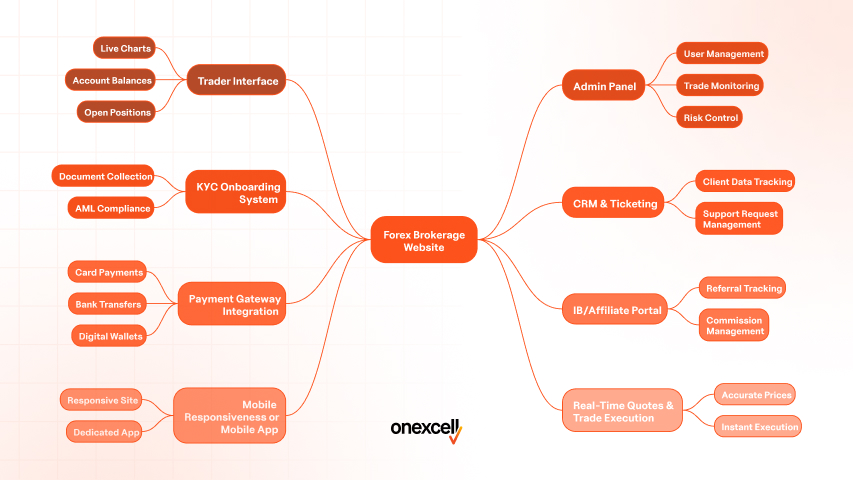
The core components of a forex brokerage website are the trader interface, admin panel, KYC system, CRM, payment gateway, affiliate portal, mobile support, and real-time trade execution. These work together to create a secure, efficient, and user-friendly trading environment.
The core components of a forex brokerage website are explained below:
- Trader Interface: This is what the client sees: live charts, account balances, open positions, and order history. It connects directly to the trading platform (like MT4/MT5) and must update in real-time to support active trading.
- Admin Panel: The admin dashboard allows brokers to manage users, monitor trades, control spreads, and oversee risk. It’s the backend control centre for day-to-day operations.
- KYC Onboarding System: A secure onboarding system collects documents like passports or utility bills for identity verification. It ensures compliance with anti-money laundering (AML) laws and global regulations.
- CRM & Ticketing: A CRM tracks client data, trading behaviour, and communications, while ticketing systems manage support requests. This helps brokers provide fast service and keep client relationships organised.
- Payment Gateway Integration: This allows clients to deposit and withdraw using cards, bank transfers, or digital wallets. Fast and secure payment processing is critical for trust and user satisfaction.
- IB/Affiliate Portal: Introducing Brokers and affiliates use this portal to track referrals, commissions, and marketing performance. It supports your growth by rewarding partners who bring in traders.
- Mobile Responsiveness or Mobile App: Whether through a responsive site or a dedicated app, mobile access is essential in today’s market. Traders expect full functionality on phones and tablets.
- Real-Time Quotes & Trade Execution: The site must display accurate live prices and execute trades instantly. This requires integration with liquidity providers and a stable trading infrastructure.
What Are The Different Ways To Build A Forex Brokerage Website?
The different ways to build a forex brokerage website are white-label platforms, custom-built solutions, SaaS brokerage tools, and hybrid approaches. Each method of a forex web design offers different levels of control, cost, and setup time.
The different ways to build a forex brokerage website include:
- White-label Solutions (e.g., MetaTrader): White-label platforms allow you to launch a branded forex website using an existing trading infrastructure like MT4 or MT5. This turnkey forex solution is fast and relatively affordable, but you have limited control over backend features and may pay ongoing fees to the provider.
- Custom-built Platforms: Custom development gives you full control over the design, features, and functionality of your brokerage website. While this full-stack brokerage development option is the most flexible and scalable, it also requires a higher upfront investment, longer timelines, and experienced developers.
- Brokerage SaaS Providers: Some companies offer hosted, plug-and-play brokerage websites as a SaaS (Software as a Service) model. These are easy to manage and include ongoing updates, but you are locked into their ecosystem with little ability to customise or own the code.
- Hybrid Approaches: A hybrid method combines white-label infrastructure (like MetaTrader) with a custom-built front-end or CRM. This gives you a faster time to market with some flexibility, but it can lead to integration issues if not managed properly.
How Much Does It Cost To Build A Forex Website From Scratch?

It costs £50,000 to £150,000+ to build a forex website from scratch, depending on the complexity, technology stack, and number of integrated features.
A basic setup with a custom front-end, MT4/MT5 integration, and payment gateway might fall between £50,000 and £70,000, while a full-stack custom brokerage with proprietary trading UI, CRM, liquidity bridge, and admin dashboards could exceed £100,000.
Key cost components include front-end and back-end development (£15,000–£40,000), trader dashboard and charting tools (£10,000–£25,000), CRM and KYC integration (£8,000–£15,000), liquidity and bridge setup (£5,000–£20,000), and QA, compliance, and security features (£5,000–£10,000).
For example, a new broker wanting full control and unique branding might invest £90,000 to build a platform tailored to their ECN model, while a larger firm may spend £150,000+ for multi-region compliance, multi-language features, and mobile apps.
Although the upfront cost is high, the long-term value comes from full ownership and scalability. It is essential to use a professional to build a forex website.
How Much Does It Cost To Launch A White-Label Forex Brokerage?
It costs £10,000 to £40,000 to launch a white-label forex brokerage, depending on the provider, licensing, platform features, and additional services bundled into the package. At the lower end, basic MT4/MT5 white-label setups start around £10,000–£15,000, which typically includes platform access, branding, and basic client portals.
Mid-range packages from reputable providers often fall between £20,000 and £30,000, offering extras like CRM access, technical support, mobile apps, and basic liquidity connections.
For example, a startup broker might pay £12,000 upfront plus £1,500/month for a turnkey MT4 package with hosted infrastructure, while a more established team could opt for a £30,000 hybrid plan with more control and advanced trading features.
Although white-labels are more affordable than custom builds, you’ll still need to budget for ongoing monthly fees, compliance tools, and marketing to operate effectively.
What Are The Major Cost Factors When Starting A Forex Brokerage Website?
The major cost factors when starting a forex brokerage website include platform choice, liquidity integration, compliance requirements, KYC tools, and ongoing operations like hosting and marketing. Each of these contributes significantly to your total startup and running costs.
The major cost factors when starting a forex brokerage are explained below:
- Platform (Custom or White-Label): A white-label platform is cheaper upfront but comes with recurring fees, while a custom platform has high development costs but offers full ownership and scalability. This is usually your largest initial investment.
- Liquidity Provider: Liquidity bridges and provider connections typically cost £5,000–£20,000, depending on volume and routing model. Some providers charge setup plus monthly volume-based fees.
- Compliance & Legal: Licensing, legal documentation, and jurisdiction setup can range from £3,000 to £15,000+, depending on whether you’re regulated. This includes registration, terms, and ongoing legal counsel.
- KYC/AML Tools: Integrated tools for identity checks, document uploads, and screening can cost £1,000–£5,000+, plus usage-based fees. These are essential for regulatory compliance and fraud prevention.
- Hosting & Server Infrastructure: Secure VPS or dedicated servers for your platform, CRM, and trading terminals typically cost £200–£1,000/month, depending on latency and uptime requirements.
- Maintenance & Technical Support: Ongoing support, bug fixes, platform updates, and monitoring usually require £500–£2,000/month or a retainer with your tech partner. Neglecting this leads to downtime and user complaints.
- App Development (Optional): If you want a custom iOS or Android trading app, expect to invest £10,000–£30,000, depending on features and whether it’s synced with MT4/MT5.
- Marketing Budget: Launching a brokerage requires a budget for PPC ads, SEO, affiliates, and content, often starting at £3,000–£10,000/month. Without marketing, even the best platform won’t gain traction.
How Much Does It Cost To Integrate Liquidity Providers?
The cost to integrate a liquidity provider ranges from £5,000 to £20,000+, depending on the provider’s terms, trading volume, and the complexity of the routing setup (e.g., ECN, STP, or hybrid models).
Integrating liquidity providers (LPs) allows your forex brokerage to offer real-time bid/ask pricing and execute trades through a deep pool of market participants. LPs act as the source of pricing and execution, and brokers connect to them using bridges or APIs, typically via platforms like MetaTrader 4/5 or custom trading engines.
Additional monthly fees may apply for volume-based pricing, bridge software, and technical support, making this one of the most critical and ongoing operational costs for any forex brokerage.
What Software Licenses Do You Need For A Forex Website?
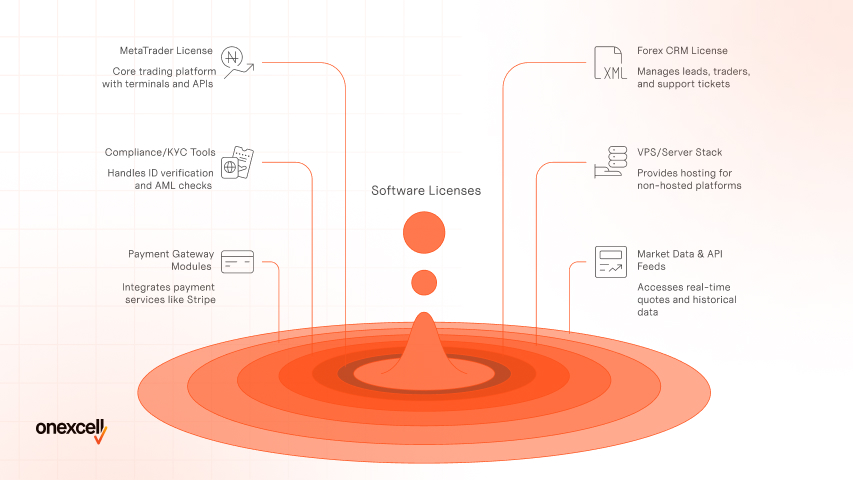
The software licenses you need for a forex website include MetaTrader licenses, CRM systems, KYC tools, and API integrations for market data and payments. Each license plays a specific role in operating a compliant, secure, and fully functional brokerage.
The software licenses you need for a forex website include the following:
- MetaTrader 4/5 License: This is the core trading platform and one of the most expensive licenses, often requiring £50,000–£100,000+ for MT5, plus monthly hosting and support. It gives you access to trader terminals, admin panels, and bridge APIs.
- Forex CRM License: A forex-specific CRM is crucial for managing leads, traders, IBs, and support tickets. Some are custom-built, while others are licensed SaaS tools with monthly fees ranging from £500 to £3,000.
- Compliance/KYC Tools: Solutions like SumSub or Veriff charge per verification or monthly tiers, usually starting at £0.80–£2.50 per user. These tools handle ID uploads, facial recognition, and AML checks.
- VPS or Server Stack (Optional): If you’re not using a hosted platform, you’ll need to license or rent a VPS/dedicated server environment, costing £100–£500+ per month for low-latency performance.
- Payment Gateway Modules: Integrating services like Stripe, B2BinPay, or crypto processors may require plugins, SDKs, or monthly gateway fees. Some are bundled into white-labels, others must be licensed separately.
- Market Data & API Feeds: Access to real-time quotes, historical pricing, and FIX protocol data from providers like Bloomberg or liquidity partners may also carry licensing fees. These ensure your pricing engine runs accurately and legally.
What Hosting And Server Infrastructure Does A Forex Website Require?
A forex website requires a robust hosting and server infrastructure to ensure low latency, high uptime, and secure transaction processing. Most brokerages use dedicated servers or VPS environments to host the website, client portal, trading platform, and CRM.
trading terminals like MT4/MT5, you’ll also need to connect to Data Centres or co-located servers near liquidity hubs (like London LD4 or NY4) to reduce execution delays. Infrastructure should include load balancers, firewalls, backup systems, and DDoS protection, especially for high-volume trading environments.
Hosting costs can range from £200 to £1,000+ per month, depending on location, redundancy, and traffic volume.
How Much Do KYC, AML, and Payment Integrations for a Forex Website Cost?

KYC, AML, and payment integrations for a forex website cost between £500 and £3,000+ per month, depending on the tools and transaction volume. Popular compliance vendors like SumSub, Veriff, and ShuftiPro offer KYC/AML services with per-check pricing or monthly bundles starting from £0.80 to £2.50 per user.
Payment gateway providers like Stripe, B2BinPay, and Adyen charge a mix of transaction fees and integration costs. A realistic monthly stack for a small brokerage might include £300–£800 for compliance, £100–£500 for payment processing, and £100–£200 for additional API support or plugins.
As your user base and transaction size grow, these costs can increase significantly due to volume-based pricing.
What Are The Hidden Or Unexpected Costs When Building A Forex Website?
The hidden or unexpected costs when building a forex website include the following:
- Legal Consulting: Beyond initial licensing, you need ongoing legal advice for contracts, regional restrictions, or regulatory updates. Legal consulting is often charged at £100–£300/hour.
- Security Audits: Periodic vulnerability scans and penetration testing to protect client data can cost £1,000–£5,000+, depending on scope and provider.
- Payment Disputes/Chargebacks: Each chargeback may result in a £15–£50 fee, not including lost revenue or payment holds from processors.
- Emergency Server Scaling: Sudden traffic spikes may require cloud scaling or new servers, adding unplanned £200–£1,000+ to your monthly bill.
- Multi-Language UI: Translating your interface and content into multiple languages can cost £500–£2,000+, especially if done professionally.
- Penalty for Unlicensed Jurisdictions: Accepting clients from restricted countries may lead to fines, blacklisting, or platform suspension. Staying compliant requires constant monitoring.
- App Store Publishing Fees (for Mobile Apps): Submitting apps to the App Store and Google Play involves £25–£99/year, plus developer time for approvals and updates.
How Long Does It Take To Launch A Forex Brokerage Website?
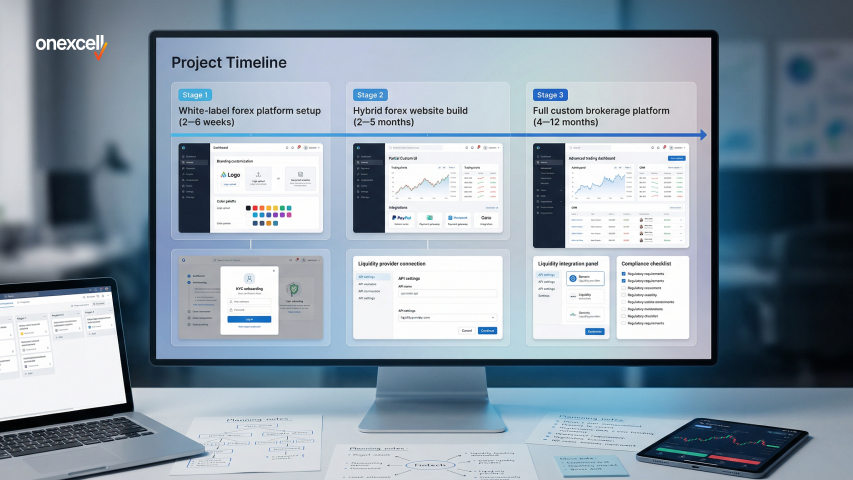
Launching a forex brokerage website can take anywhere from 2 weeks to 12 months, depending on the build type and business readiness. A white-label solution launches in 2 to 6 weeks, since most of the platform is pre-built and only requires branding and integration.
A custom-built forex website, on the other hand, can take 4 to 12 months due to the complexity of front-end and back-end development, testing, and full compliance setup. Hybrid builds, which mix white-label infrastructure with some custom features, usually take around 2 to 5 months.
Factors that affect the timeline include regulatory licensing delays, liquidity provider agreements, development team capacity, and time spent on compliance testing and bug fixing.
How Much Does It Cost To Get an Mt4/Mt5 License?
It costs approximately £75,000 to £120,000 to get an MT4 or MT5 license, depending on the version, included services, and broker requirements. The MT4 license is no longer issued to new clients by MetaQuotes, so most new brokerages opt for MT5, which is more expensive but offers multi-asset support, faster execution, and better back-office tools.
This cost typically includes the main license, server setup, technical support, and basic bridge connectivity, but you may also need to pay additional fees for hosting, upgrades, plugins, and maintenance.
For startups with smaller budgets, some providers offer white-label MT5 solutions at a lower upfront cost (around £10,000–£20,000) plus monthly platform fees.
Can I Start A Forex Brokerage With $10,000?
No, you cannot realistically start a full forex brokerage with £10,000, especially if you want to operate independently and legally. While you might afford a basic white-label package or a demo project, you’ll lack the budget for essential components like KYC/AML tools, liquidity setup, legal fees, server infrastructure, and marketing.
At a minimum, launching a reliable and compliant forex brokerage typically requires £25,000 to £50,000, even with a white-label model. If you’re starting with £10,000, a better approach would be to partner as an IB (Introducing Broker) or affiliate under an established brokerage while building your capital and customer base.
What’s The Difference Between White Label And Custom-Built Forex Sites?
The difference between white-label and custom-built forex sites lies in ownership, flexibility, and cost. A white-label site is a ready-made platform you rebrand and rent, allowing for quick launch but limited control.
A custom-built site is developed from scratch, giving you full control over features and design, but it’s more expensive and takes longer to build.
How Much Does A Forex Trading Platform App Cost To Build?
A forex trading platform app costs between £20,000 and £100,000+ to build, depending on features, platform compatibility, and backend integration. Basic apps with account access, charts, and trade execution fall on the lower end, while fully custom apps with real-time syncing, biometric login, multilingual support, and deep analytics push the cost higher.
If you’re integrating with MT4/MT5 or building a standalone trading engine, expect extra expenses for APIs, security layers, and compliance. Development time typically ranges from 3 to 9 months, depending on the scope.
Is A Forex Brokerage Website Profitable In 2026?
Yes, a forex brokerage website can be profitable in 2026, but only with the right strategy, tech setup, and marketing investment. The global forex market continues to grow, with daily trading volumes exceeding $7 trillion, offering brokers opportunities to earn through spreads, commissions, and account fees.
However, competition is fierce, and success depends on factors like low-latency execution, reliable customer support, compliance, and strong trader acquisition strategies. Brokerages that prioritise trust, mobile UX, and localisation are better positioned to grow sustainably and profitably in today’s market.
What Countries Allow Unlicensed Forex Websites?
The countries that allow unlicensed forex websites include St. Vincent and the Grenadines, Seychelles, Belize, and the Marshall Islands. These jurisdictions have minimal or no regulatory requirements for offshore brokers, making them popular for fast setups and lower costs.
However, operating without a licence comes with risks, including limited banking access, reputation issues, and restrictions on advertising in regulated regions like the UK, EU, or US. Many brokers use these jurisdictions to launch quickly while planning to secure proper licensing later.
How Do I Start A Forex Brokerage In The UK?

To start a forex brokerage in the UK, you need to register your company, apply for authorisation from the Financial Conduct Authority (FCA), and meet strict capital and compliance requirements.
The FCA mandates that brokers hold a minimum of £125,000 to £730,000 in regulatory capital, depending on the type of license (matched principal or dealing on own account).
You’ll also need to submit a detailed business plan, appoint approved persons, implement KYC/AML procedures, and have a secure IT infrastructure in place. The entire application process can take 6 to 12 months, and ongoing compliance is rigorous, but it allows you to legally offer forex trading services to UK and EU clients with high trust and credibility.
Read more on How to open a brokerage
Need to ask Something else?
Use the form here to send us your question. We’ll reply within one business day.