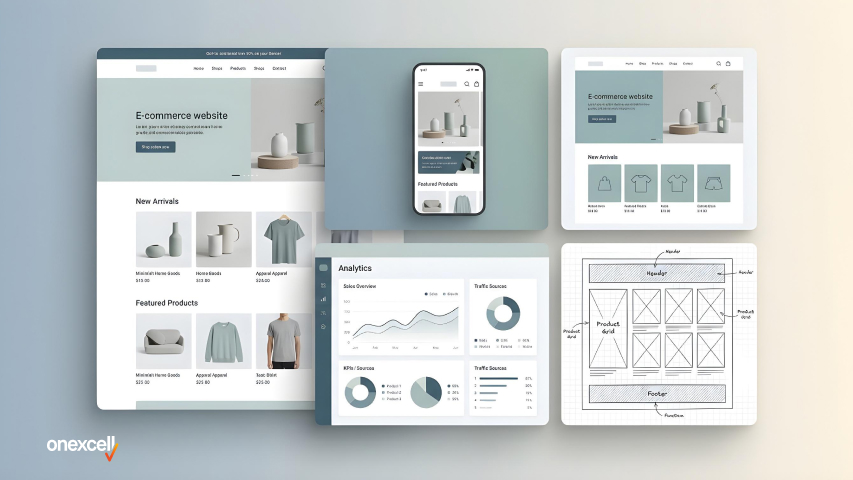
An e-commerce website design company is a specialised agency that builds online stores tailored for selling products and services. They focus on creating user-friendly, mobile-ready websites that drive sales and optimise the shopping experience.
E-commerce website design companies offer services like store setup, custom design, UX optimisation, payment gateway integration, and platform development (Shopify, WooCommerce, etc.). Many also include SEO setup, app/plugin integrations, and post-launch support.
Business owners, startups, DTC brands, and physical shops going online need e-commerce website design companies. Anyone looking to launch or grow an online store professionally can benefit from their services.
The features of a good e-commerce design company include a strong portfolio, mobile-first designs, CRO focus, and platform expertise. They also offer ongoing support, clear project timelines, and SEO-aware builds.
You choose the best e-commerce website design company by checking their past projects, understanding their process, asking the right questions, and ensuring they align with your business goals. Look for transparent pricing, clear timelines, and strong client reviews.
Hiring an e-commerce web design company costs between £5,000 and £50,000+, depending on the scope, features, and level of customisation. Extra costs may include hosting, app subscriptions, and ongoing maintenance.
Onexcell is one of the best e-commerce website design companies in the UK. They combine custom design, platform fluency, and conversion-driven strategies to help businesses grow online effectively.
What Is An E-Commerce Website Design Company?
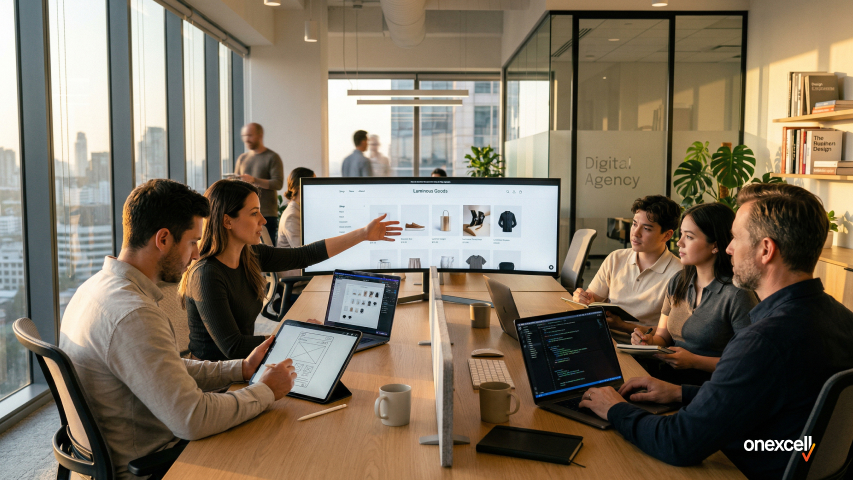
An e-commerce website design company is a specialised design agency or team that builds online stores tailored to help businesses sell products and services on the internet. Unlike regular web design, their focus is on creating high-converting shopping experiences by optimising UX (user experience), shopping carts, sales funnels, and checkout processes.
These companies combine design, SEO, and branding skills to ensure that your online store not only looks professional but also guides customers smoothly from browsing to purchase.
What Is E-Commerce?
E-commerce, short for electronic commerce, is the process of buying and selling goods or services online through digital storefronts. Examples include platforms like Shopify stores, Amazon, eBay, or direct-to-consumer (DTC) websites, where customers can browse, add products to a cart, and complete purchases through secure online transactions.
E-commerce covers both physical products, such as clothes, electronics, or groceries, and digital products like e-books, courses, or software downloads. At its core, it’s about creating a seamless way for businesses to reach customers online, handle payments, and deliver products or services directly through the internet.
What Services Do E-Commerce Website Design Companies Offer?
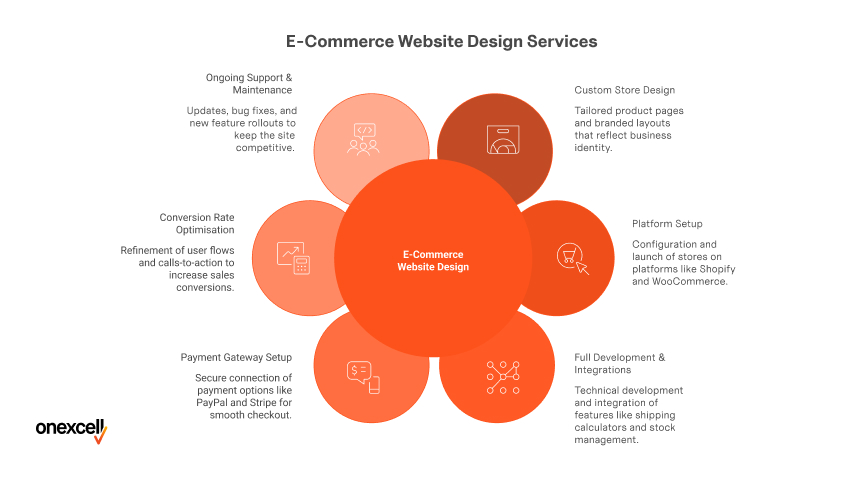
The services e-commerce website design companies offer include custom online store design, shopping cart and checkout development, and responsive UX design for all devices. They also provide platform integrations (Shopify, WooCommerce, Magento), payment gateway setup, and SEO-focused design to help stores attract and convert customers.
The core services an e-commerce website design company offers include:
- Custom Store Design: Agencies create tailored product pages, branded layouts, and user flows that reflect your business identity. A strong design ensures customers trust your store and stay longer to browse.
- Platform Setup (Shopify, WooCommerce, Magento): They configure and launch your store on platforms like Shopify or WooCommerce. This includes theme development, plugin installation, and setting up your backend for smooth operations.
- Full Development & Integrations: Beyond looks, agencies handle technical development, integrating features like shipping calculators, stock management, and third-party apps. These integrations improve automation and reduce manual work.
- Payment Gateway Setup: From PayPal to Stripe, they connect secure payment options for smooth checkout experiences. This step is critical for building customer trust and avoiding cart abandonment.
- Conversion Rate Optimisation (CRO): Agencies refine user flows, checkout steps, and calls-to-action to increase sales conversions. CRO ensures that design decisions are not just aesthetic but also drive measurable business results.
- Ongoing Support & Maintenance: They don’t stop after launch but provide updates, bug fixes, and new feature rollouts. Continuous support keeps your e-commerce site competitive and secure.
How Is An E-Commerce Web Design Company Different From A Regular Web Design Agency?
An e-commerce web design company is different from a regular web design agency in its focus on performance-driven design and sales-oriented UX. While a standard agency might prioritise branding and visuals, an e-commerce specialist builds transactional UX, optimises site speed, and creates product catalogues that are easy to filter and search.
They design online store funnels that move users from product discovery to checkout with minimal friction, using CRO (Conversion Rate Optimisation) techniques to reduce abandoned carts and increase sales.
In addition, they integrate merchant tools, payment gateways, and inventory systems, ensuring that the website isn’t just a digital brochure but a fully functional, revenue-generating online store.
What Types Of Clients Hire E-Commerce Web Design Agencies?
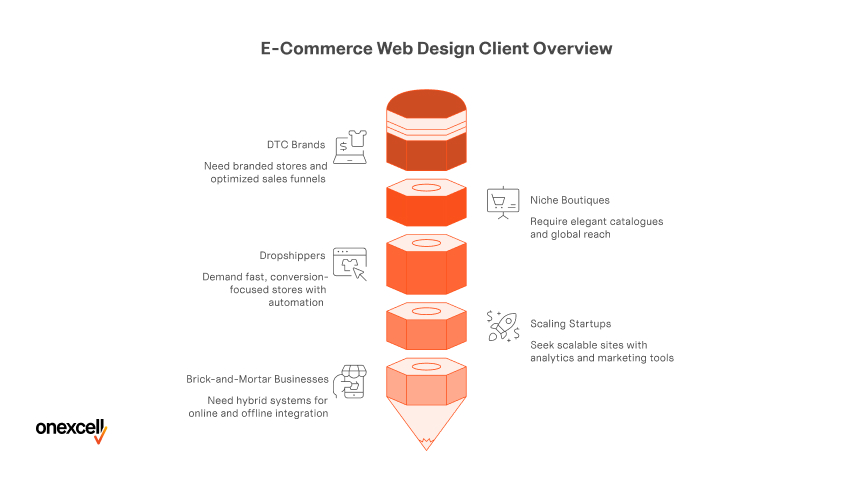
The types of clients that hire e-commerce web design agencies are retail businesses moving online, direct-to-consumer (DTC) brands, and entrepreneurs launching digital storefronts. Larger enterprises and niche sellers also rely on these agencies to build scalable online stores with advanced features like multi-currency payments, product catalogues, and custom user flows.
Types of clients that hire e-commerce web design agencies are explained below:
- DTC Brands: Direct-to-consumer businesses need tailored online stores to showcase their products and control the entire sales funnel. Agencies help them create branded digital storefronts that reflect identity and optimise user journeys. They also implement CRO strategies to boost conversions and reduce cart abandonment.
- Niche Boutiques: Small retailers specialising in unique products rely on e-commerce design agencies to compete with larger players. Agencies craft elegant product catalogues and seamless checkout experiences that make niche offerings stand out. This allows boutiques to scale beyond local markets into global reach.
- Dropshippers: Dropshipping businesses need fast-loading, conversion-focused stores that sync with supplier inventory in real-time. Agencies build Shopify or WooCommerce sites that automate product updates, orders, and tracking. This reduces manual work and creates a smoother shopping experience for customers.
- Scaling Startups: Startups aiming for rapid growth depend on scalable e-commerce websites with built-in analytics and marketing tools. Agencies ensure their sites can handle high traffic and sales spikes during promotions. They also integrate marketing funnels to support customer acquisition strategies.
- Brick-and-Mortar Businesses Going Online: Traditional retailers moving into digital need websites that sync with physical store inventory and support click-and-collect models. Agencies develop hybrid systems that bridge offline and online sales. This ensures smooth inventory management and creates new revenue streams for established retailers.
Should You Hire A Shopify Expert Or A General E-Commerce Designer?
Yes, you should hire a Shopify expert if your business is committed to the Shopify platform and you want access to its certified experts, app ecosystem, and streamlined merchant tools.
A Shopify Partner or certified expert will know how to customise themes, optimise checkout, and integrate apps quickly, making it ideal for beginners or businesses focused on speed and simplicity.
You don’t necessarily need a Shopify-only designer if you’re considering multi-platform flexibility with options like WooCommerce, Magento, or custom builds. A general e-commerce designer can give you more scalability, complex feature customisation, and budget flexibility, though it may require more development time and higher upfront costs.
What Are The Features Of A Good E-Commerce Web Design Company?
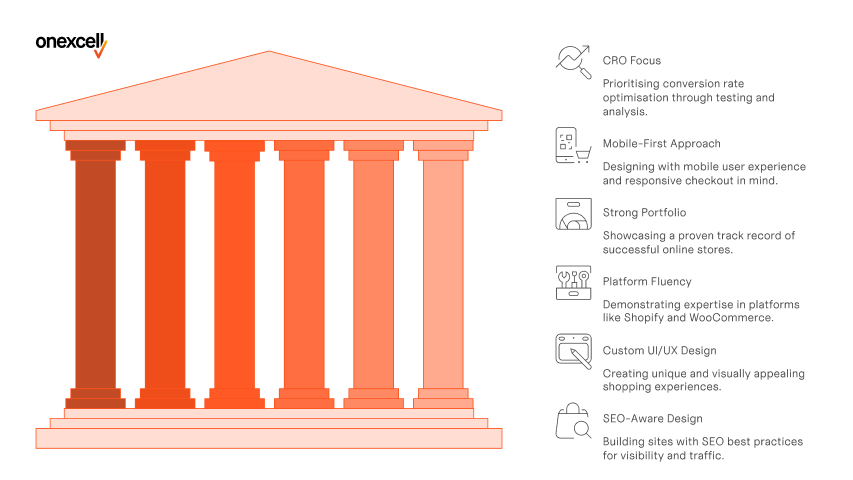
The features of a good e-commerce web design company are a proven portfolio of online stores, strong UX and CRO expertise, and deep knowledge of platforms like Shopify or WooCommerce. They also offer secure payment setups, mobile-first design, and ongoing support to keep your store competitive and scalable.
The features of a good e-commerce web design include the following:
- CRO Focus: A strong agency prioritises conversion rate optimisation by testing layouts, calls-to-action, and checkout flows. Their goal is to increase sales, not just make the site look attractive.
- Mobile-First Approach: Since most shoppers browse and buy on mobile, the company must design with mobile UX and responsive checkout in mind. Smooth navigation, quick load times, and easy payment flows on smartphones are non-negotiable.
- Strong Portfolio: A good agency shows real, functioning online stores with measurable results. A proven track record builds trust and demonstrates they can deliver design quality and performance.
- Platform Fluency: They should be fluent in platforms like Shopify, WooCommerce, or Magento. This ensures your store is built on the right system and fully leverages the platform’s ecosystem of apps and tools.
- Custom UI/UX Design: A top agency creates visual hierarchy, trust signals, and unique shopping experiences instead of relying on generic templates. Custom UI/UX web design helps your brand stand out and builds customer loyalty.
- SEO-Aware Design: Beyond visuals, they build sites with SEO best practices like clean code, structured data, and fast performance. This makes your store visible on search engines and drives long-term organic traffic.
Do E-Commerce Web Design Companies Also Offer Seo And Marketing Services?
Yes, many e-commerce web design companies also offer SEO and marketing services, but not all do. Full-stack agencies often provide technical SEO setup, schema markup, performance optimisation, and GA4 integration so your online store ranks well and loads quickly.
They may also include conversion tracking, email automation, and pixel integrations for paid media or retargeting campaigns. No, smaller design-only teams might stop at building the website, leaving you to find separate SEO or marketing specialists, so it’s important to clarify the scope before hiring.
Need to ask Something else?
Use the form here to send us your question. We’ll reply within one business day.
How Do I Choose The Best E-Commerce Website Design Company?
You choose the best e-commerce website design company by reviewing their portfolio, checking client testimonials, and testing live stores they’ve built for performance and usability. You should also assess whether they understand your business goals, target audience, and long-term scalability needs.
Follow these tips to choose the best e-commerce website design company:
- Portfolio Review: Look at their past e-commerce projects and request a UI audit or demo of live sites. This shows you their design quality and ability to handle businesses similar to yours.
- Platform Fit: Check if they specialise in the platform you plan to use, such as Shopify or WooCommerce. An agency with proven industry match will deliver faster and more reliable results.
- Pricing Transparency: Ask for a clear proposal or RFP (Request for Proposal) with a breakdown of costs. Avoid agencies that give vague pricing or hide extra fees.
- Communication Process: Evaluate how they handle a discovery call and whether they explain technical terms clearly. Good communication is critical for avoiding delays and misunderstandings.
- Client Reviews & Testimonials: Search for detailed testimonials, case studies, or LinkedIn recommendations. Honest reviews reveal how the agency works under pressure and meets deadlines.
- Post-Launch Support: Confirm if they offer ongoing support, maintenance, and updates after launch. Agencies that disappear once the site is live can leave you stuck with issues later.
What Questions Should I Ask Before Hiring An E-Commerce Design Company?
Questions you should ask before hiring an e-commerce design company include questions about their platform expertise, design process, project timelines, ownership of deliverables, and post-launch support. These ensure you know exactly what to expect and avoid costly surprises later.
The questions you should ask before hiring an e-commerce design company include the following:
- What platform do you specialize in? This helps you confirm if they are fluent in Shopify, WooCommerce, Magento, or other platforms. Choosing a company aligned with your preferred platform saves time and ensures proper integrations.
- What’s your design and onboarding process? A clear process shows how they handle scope, deliverables, and communication. This ensures you’re aligned on expectations before work begins.
- What is the typical project timeline? Asking about timelines helps you plan around product launches or campaigns. Beware of agencies that promise unrealistic delivery speeds, as quality work requires time.
- Who owns the code and final website? Ownership is critical for future updates, migrations, or scaling. You should always have full rights to your site’s code, design, and content.
- What post-launch support do you provide? Good agencies offer maintenance, bug fixes, and training after launch. Clarifying this upfront prevents being left stranded after the project is delivered.
Should You Hire A Freelancer Or An E-Commerce Agency?
You should hire an e-commerce agency if you want full support, scalability, and a structured team that can handle everything from design to integrations and long-term maintenance.
Agencies often provide a clear team structure, defined timelines, and the option of a retainer for ongoing support, making them ideal for businesses planning to scale. On the other hand, freelancers are better suited for lean builds or smaller budgets, as a one-man team can deliver quicker and cheaper setups.
However, freelancers may lack the resources and breadth of expertise that a design studio or agency can offer for complex projects.
How Much Does It Cost To Hire An E-Commerce Web Design Company?
It costs anywhere from £5,000 to £50,000+ to hire an e-commerce web design company, depending on your project scope, platform, and required features. A simple Shopify or WooCommerce store with basic templates may sit at the lower end, while a fully custom build with integrations, advanced UX, and multi-currency support can push costs much higher.
Key cost drivers include the timeline, level of customisation, hourly rate of the design team, and any third-party apps or payment integrations. Beyond the upfront build, businesses should also factor in the total cost of ownership (TCO), including hosting, maintenance, and ongoing support.
What’s The Difference Between A Web Developer And An E-Commerce Designer?
The difference between a web developer and an e-commerce designer lies in their roles and focus during the website build. An e-commerce designer is responsible for aesthetics, wireframes, and UX, ensuring the frontend looks professional and guides customers smoothly through the shopping journey.
A web developer, on the other hand, handles the backend, coding, CMS implementation, and technical integrations that make the site functional and secure. Both are needed, since the designer sets the vision and user flow, while the developer brings it to life through code and system logic.
What Is The Typical E-Commerce Website Design Workflow?
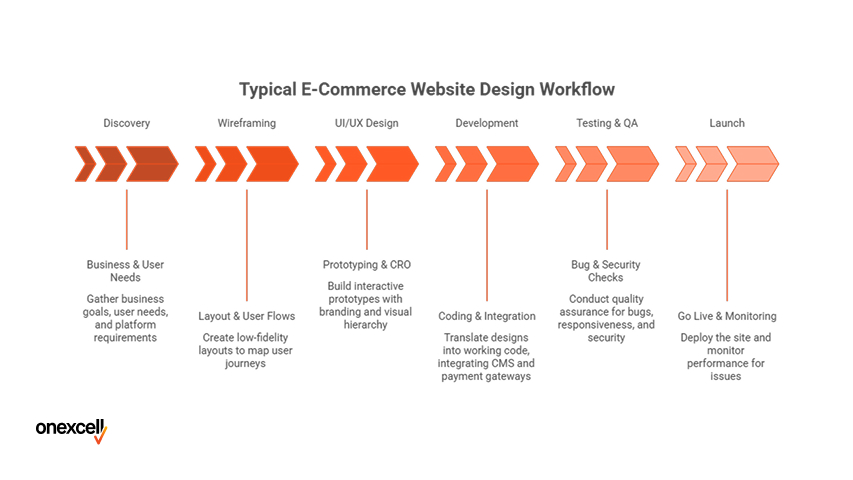
The typical e-commerce website design workflow is discovery, wireframing, UI/UX design, development, testing, and launch. Each step ensures the project moves from idea to a fully functional online store in a structured way.
Here is a typical e-commerce website design workflow:
- Discovery: This stage involves gathering business goals, user needs, and platform requirements. It sets the foundation for scope, timelines, and deliverables.
- Wireframing: Designers create low-fidelity layouts using tools like Figma to map user flows and shopping cart journeys. Wireframes help visualise structure before diving into full design.
- UI/UX Design: The team builds prototypes with branding, visual hierarchy, and interactive elements. This step focuses on optimising the customer journey and CRO (conversion rate optimisation).
- Development: Developers translate designs into working code, integrating CMS platforms, payment gateways, and product databases. Agile sprints ensure features are built and tested in stages.
- Testing & QA: Quality assurance checks for bugs, broken links, and responsive performance across devices. This includes security tests and reviewing a launch checklist.
- Launch: The site goes live after client approval and final checks. Post-launch monitoring ensures smooth performance and quick fixes if issues arise.
How Long Does It Take To Build An E-Commerce Website?
It takes 6 to 12 weeks to build a standard e-commerce website, while more complex, custom builds can take 3 to 6 months or longer, depending on scope and features. The timeline is usually broken into phases or milestones such as discovery, design, development, testing, and launch, often managed in agile sprints.
Faster turnarounds are possible for template-based Shopify or WooCommerce stores, but custom features, integrations, and multi-language support extend the build time. Setting a clear roadmap at the start ensures realistic expectations and smoother e-commerce website delivery.
Do E-Commerce Agencies Offer Maintenance After Launch?
Yes, most e-commerce agencies offer maintenance after launch, but the level of support depends on your agreement. A good agency will provide update support, hosting assistance, plugin management, uptime monitoring, and minor edits as part of a maintenance plan or retainer.
They may also help with seasonal updates, promotions, and ongoing improvements to keep your store secure and competitive. No, not every agency includes this by default, so it’s important to confirm their post-launch support terms before signing a contract.
Do E-Commerce Design Companies Specialize By Industry?
Yes, many e-commerce design companies specialise by industry, tailoring niche store designs for fashion, tech, food, luxury, beauty, or digital goods. They create vertical UX and industry-specific layouts that align with buyer personas, such as sleek visuals for luxury, bold designs for tech, or simplified flows for food delivery.
Some agencies stay generalists, but choosing one with industry-specific experience often leads to better conversion and customer engagement.
Can I Hire A Remote E-Commerce Design Team And Still Get Results?
Yes, you can hire a remote e-commerce design team and still get excellent results if the right processes are in place. Modern tools like Figma for design collaboration, Trello for task management, and Slack or Zoom for communication make async design easy across time zones.
Teams use Loom video updates, shared timelines, and transparent deliverables to keep clients fully informed. With a clear workflow and some timezone overlap, a remote team can deliver the same quality as a local agency while often being more cost-efficient.
What Are The Best E-Commerce Design Companies In Uk?
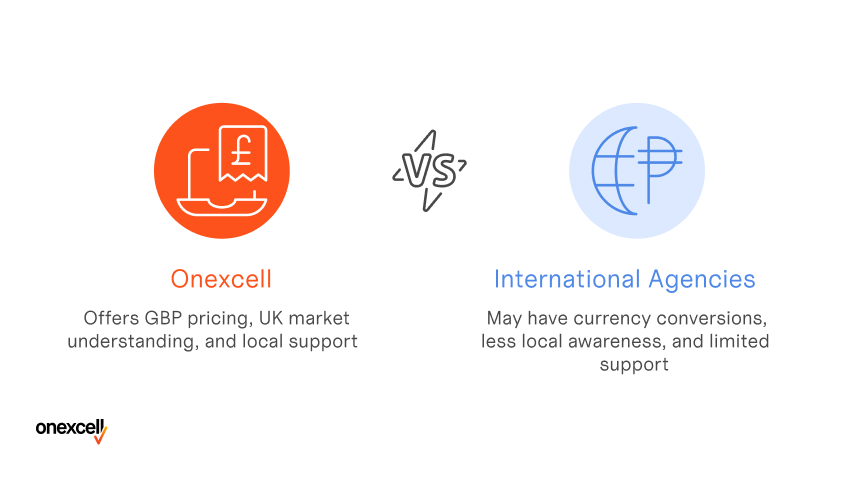
When looking for a UK‑based e‑commerce design agency, your best bets are teams like Onexcell (UK-based, with GBP pricing and a portfolio in e‑commerce). This e-commerce design company prices in GBP, understands UK consumer behaviour and compliance, and are more accessible for local meetings or alignment on UK market trends.
When evaluating, check for:
- GBP pricing & contracts: so no hidden currency conversions or surprises.
- Case studies with UK clients: showing understanding of British retail, shipping, tax, etc.
- Local support & legal awareness: especially for UK data laws, VAT, and consumer rights.
How Much Does A Shopify Website Design Cost?
A Shopify website design costs anywhere from £1,000 to £15,000+, depending on the complexity of the build. Basic stores using pre-built Shopify themes may fall on the lower end, especially for small product ranges and minimal customisation.
Custom Shopify website designs that involve Liquid coding, custom UI, app integrations, or Shopify Plus setup tend to cost more due to the time and expertise required. Costs can also rise if you need advanced features like multi-currency checkout, wholesale portals, or automated upsells. Don’t forget app subscription fees and ongoing maintenance.
Can I Design An E-Commerce Website Myself?
Yes, you can design an e-commerce website yourself using platforms like Shopify, Wix, or WooCommerce, especially if you have a small product range and are comfortable with drag-and-drop builders.
These tools offer pre-made themes and step-by-step setup guides, making it possible for non-developers to launch a functional store.
No, you may struggle to design it yourself if you need advanced features, custom branding, payment integrations, or optimisation for mobile and SEO. In such cases, hiring a professional ensures your store performs well, converts better, and leaves a strong impression on buyers.
Is WordPress Good For E-Commerce Design?
Yes, WordPress is good for e-commerce design when paired with WooCommerce, its official e-commerce plugin. It offers full control over design, custom functionality, and thousands of themes and plugins for everything from shipping to SEO.
However, it requires more hands-on setup and maintenance compared to Shopify, especially with hosting, security, and plugin updates. If you want flexibility and own your platform fully, WordPress is a strong option, but it’s best for users who are comfortable managing the technical side or have developer support.
What’s The Difference Between WooCommerce and Shopify In Design?
The difference between WooCommerce and Shopify in design lies in how much control and effort you want to put into building and managing your store. Shopify offers a streamlined, hosted experience with pre-built themes and drag-and-drop editing, making it ideal for beginners or those who want to launch quickly with minimal fuss.
WooCommerce, built on WordPress, provides more design freedom, plugin flexibility, and customisation options, but it also requires more technical setup, including hosting, security, and updates.
If you want simplicity and speed, go with Shopify. If you want full control and custom design flexibility, WooCommerce may be better suited.
What Are Common E-Commerce Design Mistakes?
Common e-commerce design mistakes include cluttered layouts, confusing navigation, slow loading speeds, and poor mobile optimisation. Many stores also fail by using weak product images, unclear CTAs, and overly complex checkout processes, which can lead to cart abandonment.
Here are some common e-commerce design mistakes that can hurt your sales and user experience:
- Cluttered Product Pages: Too much text, poor layout, or overwhelming visuals confuse customers. Clean design with clear CTAs and hierarchy leads to better conversions.
- Slow Load Times: Heavy images, unoptimised code, or bloated themes can slow your store down. Site speed is critical for both SEO and customer retention.
- Confusing Navigation: If users can’t easily find products or categories, they’ll leave. Use intuitive menus, filters, and search bars to guide them smoothly.
- Weak Mobile Design: A desktop-only focus can hurt sales, since most shoppers browse on phones. Prioritise responsive layouts and mobile-friendly checkouts.
- No Trust Signals: Missing reviews, SSL certificates, or return policies reduce credibility. Adding these increases trust and encourages more purchases.
- Complicated Checkout Process: Requiring too many steps or forcing account creation leads to cart abandonment. Aim for a simple, guest-friendly checkout.