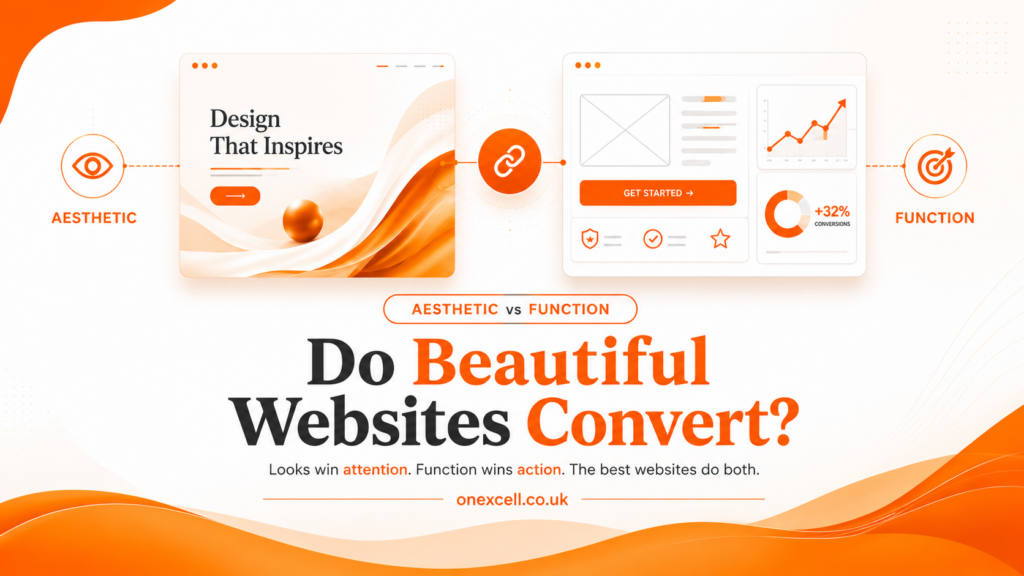
A beautiful website converts only when function comes with the beauty. On its own, a stunning design wins attention and trust, but it does not turn visitors into leads unless it also gives them information, clarity, and a clear path to act.
This is the trap many businesses fall into. They pour the whole budget into how the site looks and forget to make it work. The result is a site that gets admired, gets traffic, and then loses the visitor, because there is nothing guiding them to enquire or buy.
The honest answer depends on your goal. If you only want branding and buzz, a purely aesthetic, unique site is fine, and it can be great for traffic. But if you want lead generation and customers, beauty is not enough. You need a functional website with real information and a clear journey to conversion. The two are not enemies. The best sites are both.
This guide shows you when looks alone are enough, when they are not, and how to get both, with examples of each. We design and build websites at Onexcell that look brilliant and are engineered to convert, so this is written from hands-on experience, not theory.
Do Looks Actually Matter for Conversion?
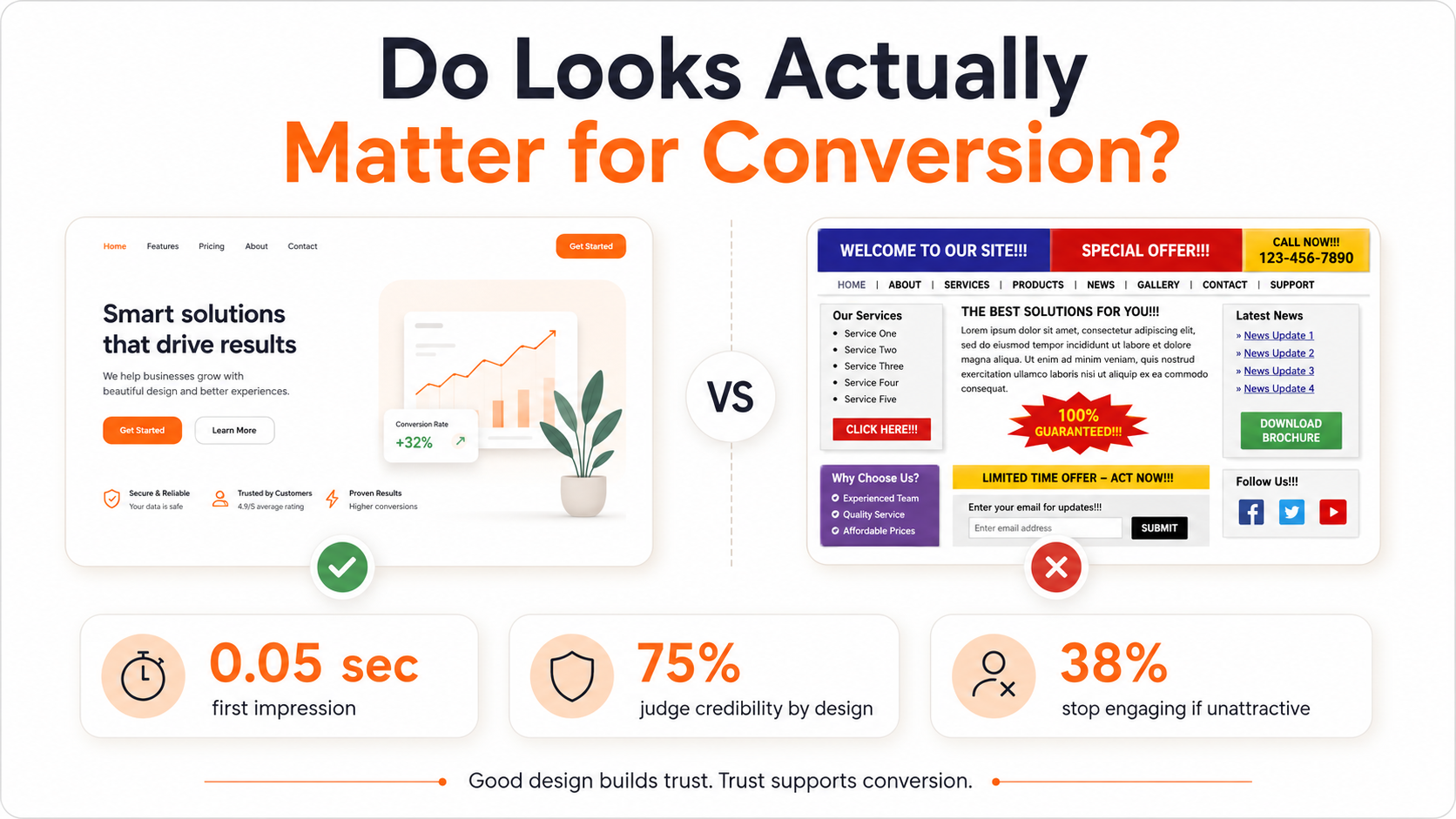
Yes. Aesthetics matter enormously, because people judge your credibility in a fraction of a second. Before a visitor reads a word, they have already formed an opinion. Research shows users form a view on a site’s visual appeal in around 0.05 seconds, and roughly 75% of people judge a business’s credibility on its website design alone. A beautiful site earns instant trust, and trust is the foundation of every conversion.
The cost of looking bad is just as real. Studies suggest around 38% of people stop engaging with a site if the layout or content is unattractive, and most will not return after one bad experience. So aesthetics are not a vanity project. They open the door. The mistake is thinking they also walk the visitor through it.
Must Read This Blog: Generating Forex Leads: A Quick Guide in 5 Easy Steps
When Is a Beautiful Website Enough on Its Own?
A purely aesthetic website is enough when your goal is branding, not lead generation. There are real cases where a stunning, minimal, unique site is exactly right. If the job is to build an image, win attention, or make a statement, beauty carries it. These sites often perform brilliantly for traffic and press, because they are memorable and shareable.
There are 4 situations where an aesthetic-led site is the right call:
- Pure branding and image. A brand statement site whose only job is to look premium and memorable.
- Portfolios and showcases. Creative work where the design is the product and the visuals do the selling.
- Campaigns and launches. Short-lived, high-impact pages built for buzz, awareness, and social sharing.
- Awards and reputation. Sites designed to win recognition and signal creative status in an industry.
If that is your goal, build something unique and beautiful and do not apologise for it. The problem only starts when a business needs leads and customers, but builds a branding site by mistake.
Must Read This Blog: Dark vs Light UI in Trading Websites: Which Converts Better?
Why Do Beautiful Websites Often Fail to Convert?
Beautiful websites fail to convert when they forget the visitor’s job, hiding information and burying the path to action behind style. This is the heart of the problem. Many businesses work hard on the design and never work on the conversion. The site looks good, but it is not conversion-friendly, because there is not enough information, the message is unclear, and the visitor is left admiring the page with no idea what to do next.
There are 5 ways a beautiful site quietly loses conversions:
- Too little information. Visitors need answers before they act. A gorgeous page with no detail leaves them unsure and gone.
- Hidden or clever navigation. Style-over-clarity menus confuse people. When a famous retailer replaced its menu with a search icon, users could not find categories and complained loudly.
- No clear call to action. If the next step is not obvious, most visitors will not hunt for it.
- Style over speed. Heavy animations and huge images slow the page, and slow pages bounce. Load time rising from 1 to 5 seconds makes a visitor far more likely to leave.
- Form over function on mobile. A design built to impress on desktop that breaks on a phone loses most of your audience.
Pro tip: Ask one blunt question of every page: what do I want the visitor to do here, and is that obvious in 3 seconds? If a beautiful page cannot answer that, it is a branding page pretending to be a conversion page.
What Makes a Website Actually Convert?
Function converts: clear information, easy navigation, fast pages, and an obvious path to action. Getting traffic to a site is the easy part. Getting visitors to convert is the real work, and that is a job for function. A functional site does the work for the visitor, guiding them smoothly from landing to enquiry without friction or confusion.
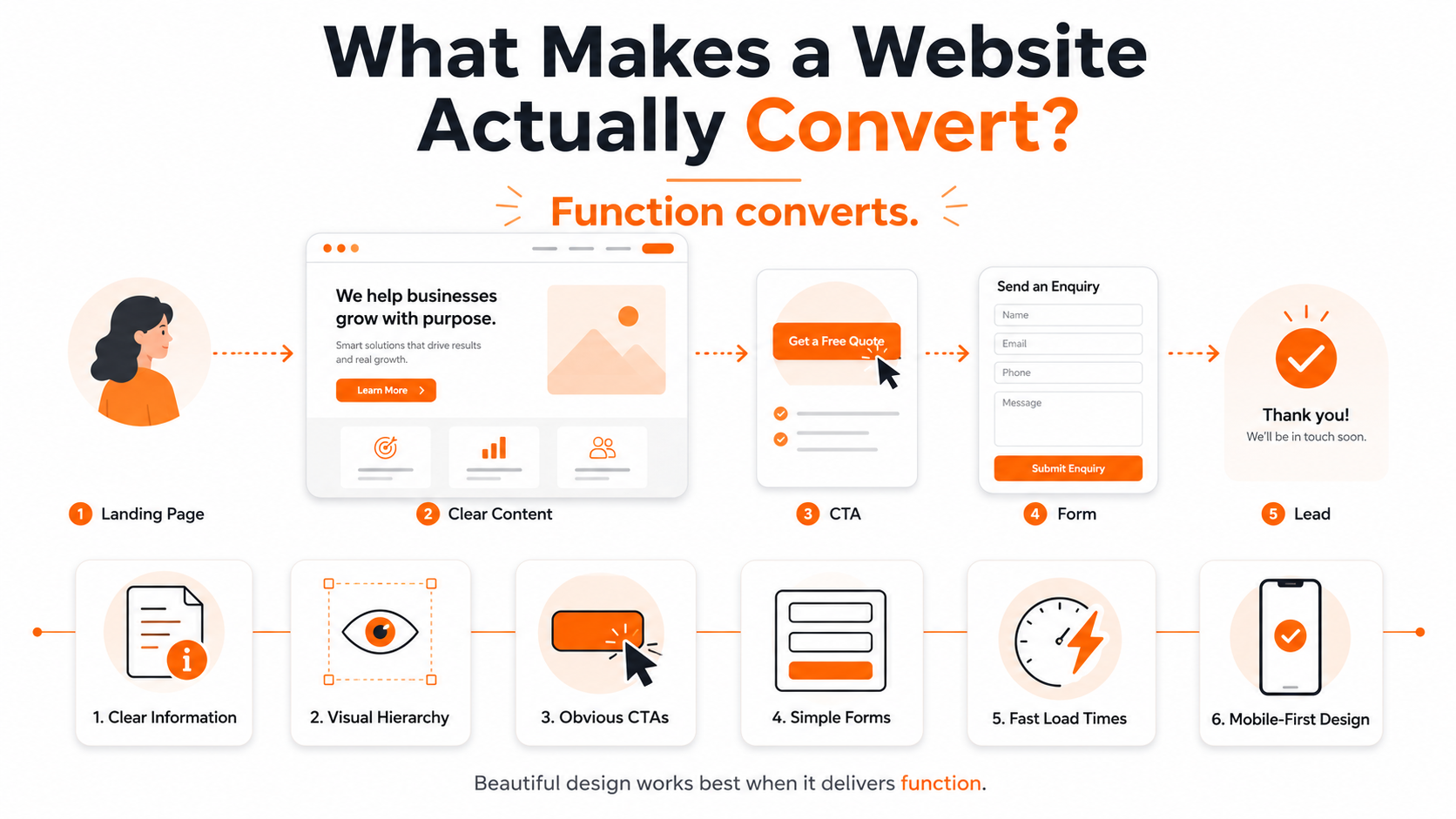
There are 6 functional elements that turn visitors into leads:
- Clear information. Answer the visitor’s real questions about what you do, how it works, and why to trust you.
- Strong visual hierarchy. Guide the eye to the message and the call to action, in the order that matters.
- Obvious calls to action. Make the next step visible and repeated, so acting is effortless.
- Simple forms. Ask for the minimum, since every extra field loses leads.
- Fast load times. Speed is conversion. Faster pages keep visitors and convert far better than slow ones.
- Mobile-first design. Most visitors arrive on a phone, so the mobile experience must be flawless.
Notice that none of these fight against beauty. They are the structure a beautiful design should be built on. Design is not decoration laid on top; done properly, design is how function is delivered.
| Get a website that looks brilliant and converts, with Onexcell Onexcell is a UK web design and development agency that builds beautiful websites engineered to convert. We start from your goal, then design the information, structure, and calls to action that turn visitors into leads, without sacrificing a premium look. We work with businesses worldwide, with deep experience in forex broker and prop firm websites across the Middle East. Want a site that is both beautiful and high-converting? Use the form at onexcell.co.uk to send your question. The team replies within one business day. |
Aesthetic or Function: Which Should You Choose?
Choose both, and let your goal decide which leads. This is not really a battle. The strongest websites are beautiful and functional, because good design is good usability. The question is which one leads for your specific goal, and the answer is simple once you name that goal.
If the goal is branding and buzz, let aesthetics lead and keep function clean underneath. If the goal is leads and sales, let function lead and make it beautiful. For most businesses, the site has to generate real customers, so function comes first, and a premium look makes that function more persuasive.
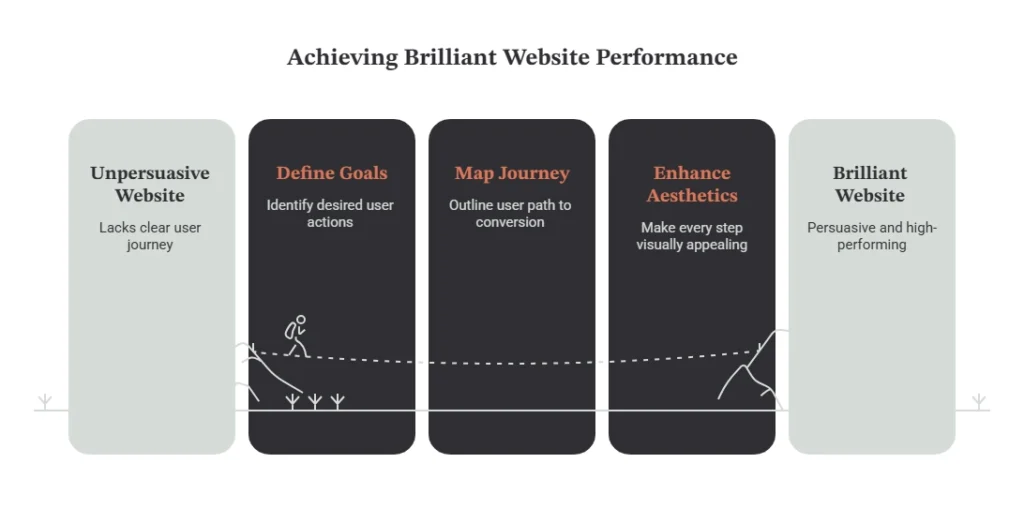
The best design process starts from the goal and the user, not from a mood board. Decide what you want visitors to do, map the information and journey that gets them there, and then make every step of that journey beautiful. That is how you get a site that looks brilliant and performs brilliantly.
Must Read This Blog: 12 Proven Ways to Drive Organic Traffic to Your Website
Is Investing in Design Worth It for Conversion?
Yes, when the design is built around function, the return is significant. Good design is not a cost with no payback. Handled strategically, it is one of the highest-return investments a business can make, because it lifts trust, engagement, and conversion at the same time.
The evidence for design-led, function-first websites is strong:
- UX returns compound. Research from Forrester found a strong interface can lift conversion by up to 200%, and a well-executed end-to-end experience can push that higher.
- Speed pays. Pages that load in about a second convert far better than pages that take several seconds.
- Trust drives revenue. Since most people judge credibility on design, a premium, functional site directly supports every sale.
The lesson is not to spend more on looks. It is to spend on design that serves a goal. A beautiful site with no function wastes the budget. A functional site with no beauty underperforms on trust. The two together are what pay back.
What Design Mistakes Kill Website Conversion?
The biggest mistake is designing for looks and forgetting the visitor has a job to do. There are 7 mistakes that turn a beautiful site into a poor converter, listed below.
| Mistake | Why it costs you conversions |
| Designing without a goal | A site with no defined job cannot be built to convert. |
| Too little information | Visitors will not act on a page that does not answer their questions. |
| Clever but unclear navigation | Style-over-clarity menus confuse visitors and raise bounce. |
| Hidden or weak calls to action | If the next step is not obvious, most visitors never take it. |
| Style over speed | Heavy visuals slow the page, and slow pages lose visitors. |
| Ignoring mobile | A desktop-only beauty breaks for most of your audience. |
| Beauty as an afterthought too | No visual appeal means no trust, and no trust means no conversion. |
Frequently Asked Questions About Website Design and Conversion
1. Do Beautiful Websites Actually Convert?
Beautiful websites convert when beauty is paired with function. Good looks build the instant trust that conversion depends on, but a site also needs clear information, easy navigation, fast pages, and obvious calls to action to turn visitors into leads. Beauty opens the door; function walks the visitor through it.
2. Is Aesthetics or Functionality More Important in Web Design?
Both matter, and the right lead depends on your goal. For branding and buzz, aesthetics can lead. For leads and sales, function must lead, with beauty supporting it. For most businesses that need customers, function comes first, because a site that looks good but does not guide visitors to act will not convert.
3. Can a Website Be Too Beautiful?
A website can be too focused on beauty. When style hides information, complicates navigation, or slows the page, the design works against conversion. The site is not too beautiful; it is under-functional. The fix is to keep the premium look and add the clarity, structure, and speed that help visitors act.
4. When Is an Aesthetic-Only Website the Right Choice?
An aesthetic-only website is right when the goal is purely branding, image, or buzz, such as a brand statement site, a creative portfolio, or a campaign page. These can perform brilliantly for traffic and reputation. The problem is only when a business needs leads and customers but builds a branding site by mistake.
5. How Do You Make a Website Both Beautiful and Functional?
Start from the goal and the user, not the visuals. Define what you want visitors to do, map the information and journey that gets them there, then make every step beautiful. Keep navigation clear, calls to action obvious, pages fast, and the experience flawless on mobile, so the design delivers function rather than hiding it.
6. Does Website Design Affect SEO and Traffic?
Yes. Search engines reward fast, mobile-friendly, well-structured sites with a good user experience, so design that improves usability also improves rankings and traffic. A beautiful, functional site keeps visitors engaged and lowers bounce, which sends positive signals to search engines and supports both traffic and conversion.
7. Why do “ugly” websites like Craigslist or Amazon convert so well?
They prioritize cognitive familiarity and zero friction. Amazon and Craigslist use highly standardized layouts that require no learning curve. Users know exactly where to click, search, and buy. “Ugly” sites often have exceptionally fast load times, clear text-based hierarchies, and direct calls-to-action (CTAs) that completely eliminate decision fatigue.
8. What is the “Aesthetic-Usability Effect” in web design?
It is a psychological phenomenon where users perceive visually appealing designs as more usable and efficient. Because a site looks polished, users experience positive emotions, which increases their patience. Consequently, they are much more likely to forgive minor technical bugs, slow loading times, or confusing navigation layouts.
9. How does website loading speed impact conversion rates?
Site speed is the ultimate conversion killer. Data shows that every 100-millisecond delay in load time can drop conversion rates by 7%. If a website utilizes uncompressed heavy videos, parallax scrolling, or complex animations to look premium, the resulting slowdown will drive users away before they ever see the aesthetic details.
10. Why does my visually stunning website have a 90% bounce rate? How do I fix it?
A high bounce rate on an aesthetic site typically points to three friction points:
- Slow LCP (Largest Contentful Paint): Your heavy visual assets are making users wait too long on a blank screen. Fix: Compress all images to WebP/AVIF formats and lazy-load below-the-fold media.
- Vague Above-the-Fold Messaging: You chose a poetic, artsy headline instead of stating clearly what you sell. Fix: Swap clever copy for a direct value proposition.
- Mystery Meat Navigation: Your menu icons or buttons are too abstract. Fix: Use standard, predictable icons (like a magnifying glass for search or a cart icon) and ensure buttons look clickable.
11. How do I build a luxury brand aesthetic without ruining my e-commerce conversion rates?
Use the “Visual Shell, Functional Core” framework. Keep your brand identity (high-end typography, white space, and editorial photography) intact on top-of-funnel pages like the Homepage or Brand Story page. However, the moment a user moves to a Product Detail Page (PDP) or Checkout Flow, switch strictly to high-utility conventions: persistent “Add to Cart” buttons, clear pricing, zero ambient animations, and a single-page checkout screen.
Final Word: Start With the Goal, Then Make It Beautiful
So, do beautiful websites convert? They do when function comes with the beauty. Aesthetics win attention and trust, which every conversion needs, but only information, clarity, speed, and a clear path to action turn that attention into leads. Beauty without function is a branding exercise, and that is fine if branding is the goal. If you need customers, build function first and make it beautiful.
Here is the approach in 6 steps:
- Name your goal: branding and buzz, or leads and sales.
- If leads are the goal, lead with function and make it beautiful.
- Give visitors the information they need to act.
- Keep navigation clear, calls to action obvious, and forms short.
- Make pages fast and flawless on mobile.
- Then apply a premium, on-brand look to every step of the journey.
Do this, and you stop choosing between beautiful and effective. You get a website that looks brilliant, earns trust, and converts, which is the only version worth building when your business depends on results.